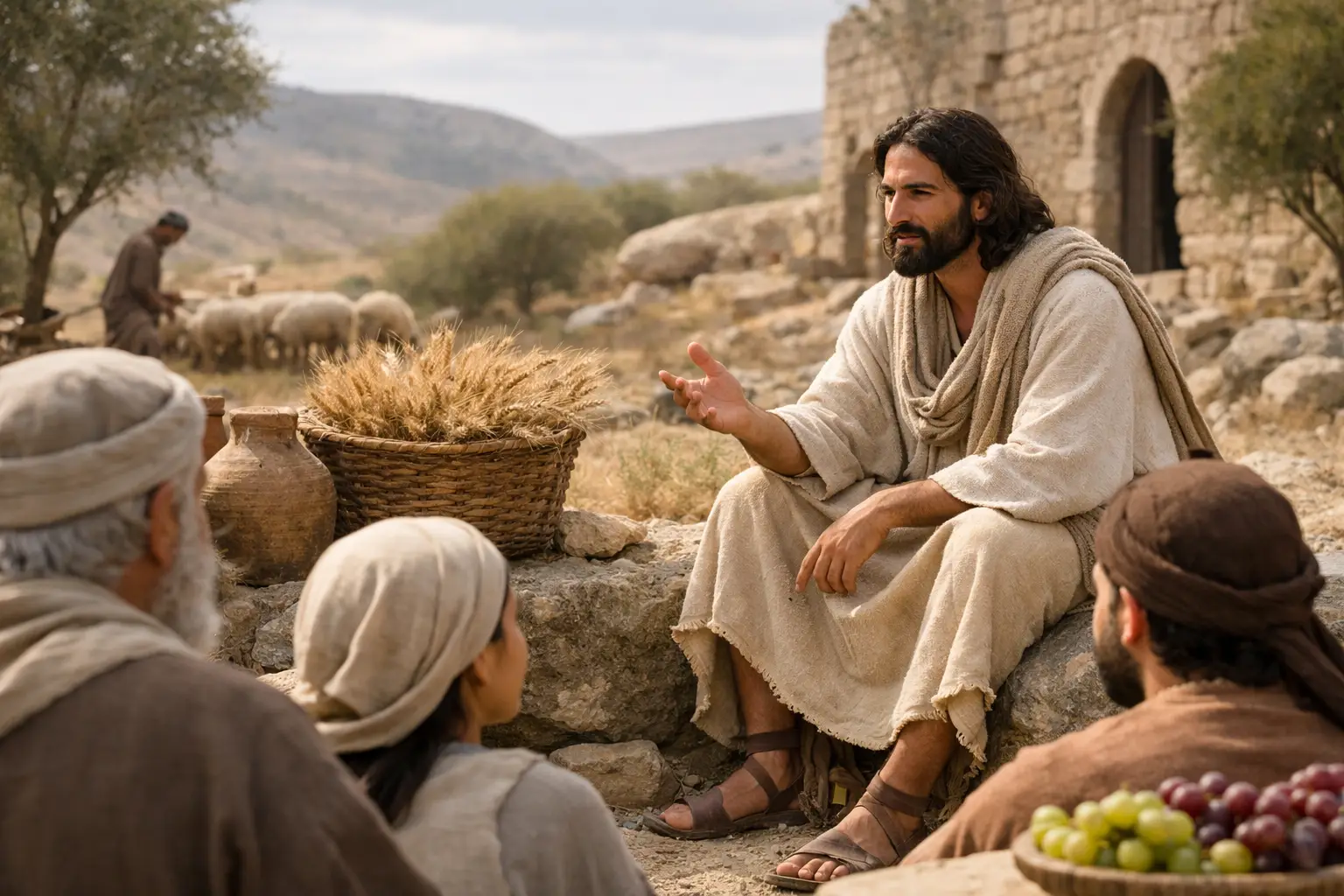
Jesus did not tell parables merely to make difficult ideas easier to remember. He used familiar scenes – a field, a family table, a road, a vineyard – to reveal the reality of God’s kingdom and to expose the condition of the human heart. The best parables of Jesus explained in their context do more than offer moral lessons. They call us to hear Him, trust Him, repent, and live under God’s rule.
The Gospels record many parables, and each deserves careful study. Calling some the “best” does not mean the others are less inspired or less valuable. These are among the clearest and most formative because Jesus either explains them directly or uses them to address central matters of faith, mercy, discipleship, prayer, and judgment.
How to Read the Parables of Jesus
A parable is a purposeful comparison, not a code in which every detail must carry a hidden meaning. Jesus often spoke in parables to reveal truth to receptive hearers while confronting those who resisted Him. After telling the parable of the sower, He said, “He who has ears to hear, let him hear” (Matthew 13:9).
That means context matters. Ask who Jesus was addressing, what question or conflict prompted the parable, and what response He calls for. Start with Jesus’ own words before moving to later applications. A parable may comfort the humble, warn the self-confident, or do both at once.
1. The Parable of the Sower: Hearing That Bears Fruit
In Matthew 13:1-23, Mark 4:1-20, and Luke 8:4-15, seed falls on four kinds of soil. The seed is the word of God, and the soils represent different responses to it. Some hear but do not understand; some receive the word with joy but fall away under trouble; some are choked by cares, riches, and pleasures; and some receive the word with an honest and good heart and bear fruit.
Jesus Himself provides the interpretation, leaving little doubt about the central concern: how we hear His word. The parable is not an invitation to judge everyone else’s soil. It calls each listener to receive Christ’s teaching deeply enough that it reshapes endurance, priorities, and obedience.
2. The Good Samaritan: Who Is My Neighbor?
A lawyer asked Jesus, “And who is my neighbor?” seeking to limit the command to love his neighbor as himself. Jesus answered with the story of a man left wounded on the road, passed by religious figures, and cared for by a Samaritan (Luke 10:25-37).
The surprise was sharp. Samaritans and Jews carried longstanding hostility, yet the Samaritan is the one who acts with costly mercy. Jesus ends not by defining the smallest circle of people we must love, but by asking who proved to be a neighbor. His command is direct: “Go and do likewise.”
This parable does not teach that compassion earns salvation. It teaches that love for God is not separated from mercy toward people in need. Genuine obedience crosses lines of convenience, familiarity, and social approval.
3. The Prodigal Son: The Father Who Receives Sinners
The parable often called the prodigal son appears in Luke 15:11-32. A younger son demands his inheritance, wastes it in a distant country, and returns prepared to be treated as a servant. Instead, his father runs to him, embraces him, restores him, and celebrates his return.
Yet the story includes the older brother, who resents the father’s welcome. Jesus told this parable while religious leaders complained that He received sinners and ate with them. The father’s joy reveals God’s gracious welcome of the repentant. The older brother’s anger warns those who know religious language but cannot rejoice when mercy reaches others.
Repentance is not vague regret. The younger son comes to his senses, turns back, and acknowledges his sin. The father’s response does not minimize the sin; it magnifies grace.
4. The Lost Sheep: The Joy of Rescue
In Luke 15:3-7, a shepherd leaves ninety-nine sheep to seek one that is lost. When he finds it, he rejoices and calls others to rejoice with him. Jesus explains that there is joy in heaven over one sinner who repents.
The image shows the personal concern of God for the lost. No person is insignificant to Him. It also corrects the cold assumption that faithfulness means standing apart from those who are far from God. Jesus seeks, receives, and restores sinners.
At the same time, the parable does not make sin harmless. The sheep is lost and needs to be found. The gospel offers more than affirmation of our wandering. It brings us home to God.
5. The Unforgiving Servant: Mercy Received Must Shape Mercy Given
Peter asked Jesus how often he should forgive someone who sins against him. Jesus answered with the parable of a servant forgiven an enormous debt who then refuses to forgive a fellow servant a small debt (Matthew 18:21-35).
The contrast is meant to humble us. Before a holy God, we stand in need of mercy we could never repay. When we understand the forgiveness we have received through Christ, we cannot continue to cherish an unforgiving spirit toward others.
Forgiveness can be costly, and Jesus does not tell wounded people to pretend evil did not happen. Wisdom, truth, boundaries, and appropriate civil protection may still be necessary. But personal vengeance and settled bitterness have no place in the heart of one who has appealed to God for mercy.
6. The Pharisee and the Tax Collector: Coming to God Humbly
Two men went to the temple to pray in Luke 18:9-14. The Pharisee recited his religious achievements and compared himself favorably to others. The tax collector stood at a distance and prayed, “God, be merciful to me, a sinner!”
Jesus said the tax collector went home justified rather than the Pharisee. The issue was not that fasting or giving are wrong. The issue was self-righteousness. The Pharisee trusted his record; the tax collector cast himself on God’s mercy.
Jesus’ conclusion remains searching: “For everyone who exalts himself will be humbled, but he who humbles himself will be exalted.” We do not enter God’s kingdom by comparing ourselves with people around us. We come through humble faith in His mercy.
7. The Rich Fool: The Danger of Living for More
In Luke 12:13-21, a man asks Jesus to settle an inheritance dispute. Jesus responds with a warning: “One’s life does not consist in the abundance of his possessions.” He then tells of a rich man whose land yields plentifully. The man plans larger barns and many comfortable years, but God says, “Fool! This night your soul will be required of you.”
Jesus is not condemning work, planning, or responsible provision. He is exposing a life that treats material increase as security while ignoring God and eternity. The man speaks repeatedly of “my” crops, “my” barns, and “my” goods, but he is not rich toward God.
The question is not simply how much we possess, but whether possessions possess us. Christ calls His followers to seek God’s kingdom and trust the Father’s care.
8. The Mustard Seed: The Kingdom’s Unexpected Growth
Jesus compares the kingdom of heaven to a mustard seed, small at first yet growing into something large enough for birds to nest in its branches (Matthew 13:31-32). He also compares it to leaven working quietly through flour (Matthew 13:33).
The kingdom’s beginning in Jesus’ ministry could appear unimpressive to those expecting immediate political display or public triumph. But God’s reign advances according to His purpose. What begins quietly is not weak, and what is unseen is not unimportant.
This parable encourages patient faithfulness. We may not always see the fruit of gospel witness, prayer, or obedient service quickly. Jesus teaches us not to measure God’s work only by what appears large at the moment.
9. The Ten Virgins: Readiness for the Bridegroom
In Matthew 25:1-13, ten virgins wait for a bridegroom. Five are wise and bring oil for their lamps; five are foolish and are unprepared when he arrives. Jesus’ closing command is plain: “Watch therefore, for you know neither the day nor the hour.”
The parable belongs within Jesus’ teaching about His return and the need for faithful readiness. It is not given to encourage speculation about dates. It calls disciples to persevering faith that cannot be borrowed from someone else at the last moment.
Readiness is not anxious prediction. It is a life of watchful obedience, trusting Christ and remaining faithful to His words.
10. The Sheep and the Goats: Serving Christ in the Least
Jesus describes the Son of Man separating people as a shepherd separates sheep from goats (Matthew 25:31-46). The righteous are commended for feeding the hungry, welcoming the stranger, clothing the naked, caring for the sick, and visiting the imprisoned. Jesus says, “As you did it to one of the least of these my brothers, you did it to me.”
This passage carries both comfort and warning. Christ sees acts of mercy that others overlook. He also rejects a profession of faith that remains untouched by compassion. Good works do not replace faith in Christ, but a living faith bears visible fruit in love.
Let Jesus’ Parables Examine Us
The parables are not safe stories for distant audiences. They ask whether we are hearing God’s word, receiving His mercy, loving the neighbor before us, forgiving as we have been forgiven, and preparing to meet Christ. Read one parable slowly this week. Notice Jesus’ setting, listen to His closing words, and ask Him to make your response more than admiration. His words are meant to be heard and lived.