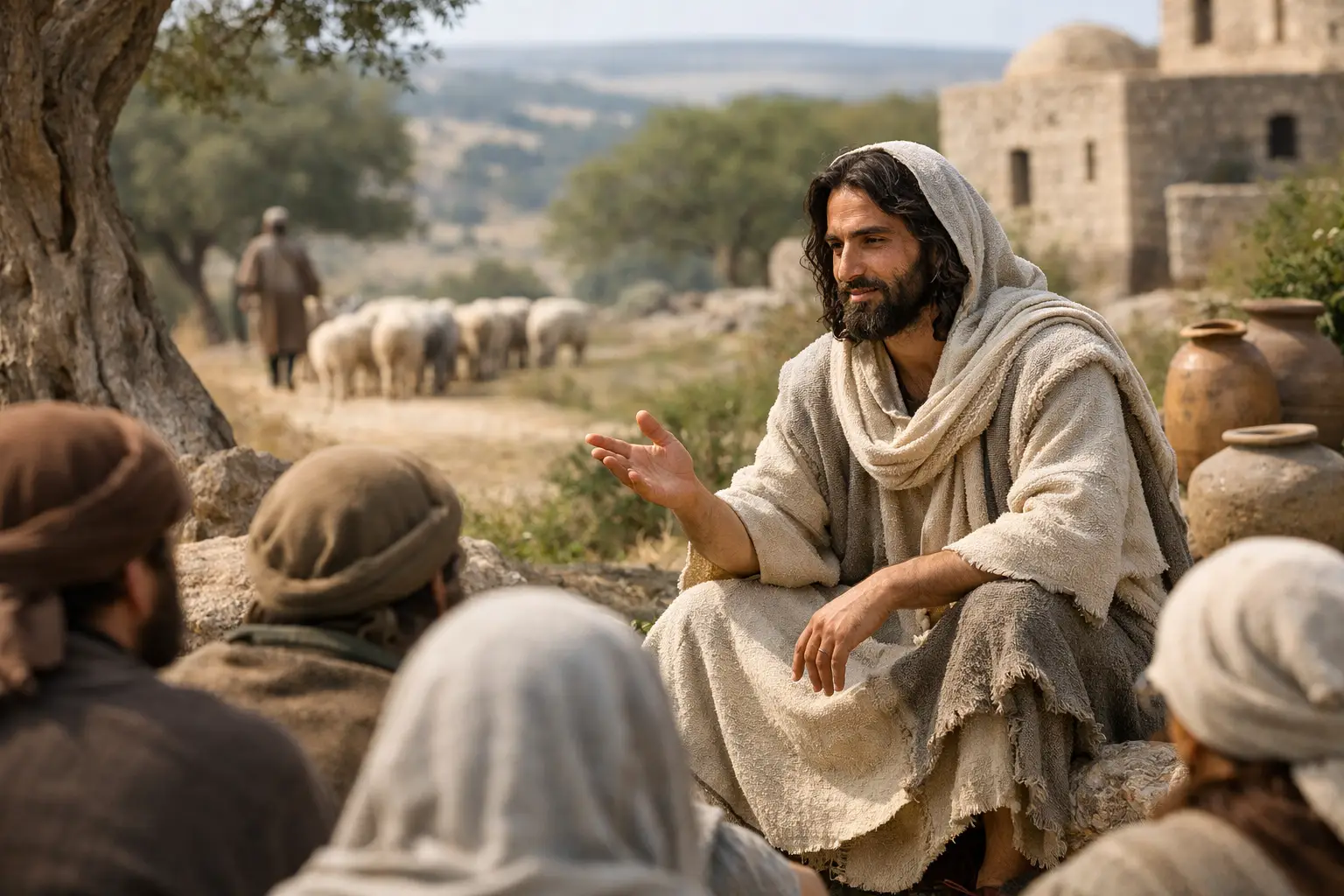
A farmer scattering seed, a father watching for his lost son, a traveler left wounded beside the road – Jesus used ordinary scenes to speak about eternal realities. Yet His stories were not merely memorable illustrations. When His disciples asked, in effect, why did Jesus use parables, He gave an answer that reaches to the heart of hearing God’s Word: “To you it has been given to know the secrets of the kingdom of heaven, but to them it has not been given” (Matthew 13:11).
Parables reveal truth, but they also require a response. They invite the humble listener to come nearer to Jesus, ask, reflect, and obey. For the listener who is indifferent or resistant, the same story can remain a puzzle. Understanding this helps us read Jesus’ parables with both confidence and reverence.
What Is a Parable?
A parable is a brief comparison or story drawn from familiar life that communicates a deeper spiritual truth. Jesus spoke about seeds, fields, fishing nets, wages, banquets, sheep, coins, vineyards, and family relationships because His hearers knew these things well. He did not use everyday images to make His teaching shallow. He used them to bring the kingdom of God into clear view.
A parable often works by placing a familiar situation beside an unexpected turn. The Samaritan, not the respected religious figures, becomes the true neighbor in Luke 10:25-37. The father runs to welcome his returning son in Luke 15:11-32. The workers hired late receive the same wage as those who worked all day in Matthew 20:1-16. These surprises expose assumptions and call listeners to see God, themselves, and others differently.
Jesus did not give every parable a single detail-by-detail explanation. The parable of the sower is one He interpreted for His disciples (Mark 4:13-20). In other cases, He left room for His hearers to weigh the story before God. The central message, its setting, and Jesus’ own words provide the proper guide for understanding.
Why Did Jesus Use Parables to Teach the Kingdom?
Jesus’ central proclamation was that the kingdom of God had drawn near (Mark 1:15). His parables showed what that kingdom is like and how people must respond to it. They taught that God’s reign may begin in ways that look small, like a mustard seed, yet its final work is certain and far-reaching (Mark 4:30-32).
The kingdom parables also corrected expectations. Many people looked for visible power, immediate national triumph, or confirmation of their own religious status. Jesus described hidden seed growing, leaven working through dough, treasure worth selling everything to possess, and a net that would finally separate fish. God’s kingdom was present in the ministry of Jesus, but its full outcome would unfold according to God’s wisdom and timing.
This teaching remains necessary. We can be tempted to measure God’s work only by what is impressive, fast, or publicly celebrated. Jesus directs us to the quiet faithfulness of seed, the patient work of a farmer, and the costly joy of finding treasure. His parables teach us to value what God values.
Parables Made Truth Memorable
A well-told story stays with us. Jesus’ hearers could picture a lamp set on a stand, bridesmaids waiting with lamps, or a shepherd searching the hills for one sheep. Long after a formal argument might be forgotten, the image remained.
But memorability was not the final goal. A parable lodges truth in the mind so that it can confront the conscience. Someone who hears about the unforgiving servant cannot easily separate God’s mercy toward them from their treatment of another person (Matthew 18:21-35). Someone who hears about houses built on rock and sand must face whether they are actually putting Jesus’ words into practice (Matthew 7:24-27).
Parables Called People to Examine Their Hearts
Jesus often ended His parables with the words, “He who has ears to hear, let him hear” (Mark 4:9). Hearing, in this sense, is more than receiving sound. It is a willing, obedient reception of God’s truth.
The parable of the sower makes this plain. The seed is the word, but the outcomes differ because the soils differ. Some hear without understanding; some receive with brief enthusiasm but fall away under trouble; some allow worries, riches, and desires to choke the word. Good soil hears, receives, and bears fruit (Mark 4:1-20).
The question is not simply, “Do I understand this story?” It is, “What kind of hearer am I becoming?” Jesus’ parables resist detached study. They call for repentance, faith, mercy, forgiveness, watchfulness, and perseverance.
Parables Revealed Truth and Also Exposed Resistance
This is one of the more difficult parts of Jesus’ teaching. In Matthew 13:10-17, Mark 4:10-12, and Luke 8:9-10, Jesus explains that parables both disclose “the secrets of the kingdom” to His disciples and relate to the spiritual blindness of those who refuse to see and hear.
Jesus cites Isaiah 6:9-10, a passage spoken in a setting where people had persistently resisted God’s Word. The point is not that Jesus took pleasure in hiding salvation from sincere seekers. Throughout the Gospels, He welcomed those who came to Him in faith, answered honest questions, and explained His teaching privately to His disciples. “Ask, and it will be given to you; seek, and you will find,” He said (Matthew 7:7).
At the same time, Jesus did not offer truth as entertainment for spectators who had no desire to submit to God. His parables revealed the condition of the heart. The receptive hearer was drawn into deeper understanding. The hardened hearer could hear the same words and turn away unchanged.
There is a sober mercy in this. Jesus did not flatter religious confidence or allow shallow curiosity to masquerade as faith. He spoke truthfully, and His words brought hidden motives into the light. The issue was not intellectual ability. Fishermen, tax collectors, religious leaders, and crowds all needed the same posture: humility before the Son of God.
Jesus’ Parables Fulfilled Scripture
Matthew specifically tells us that Jesus’ use of parables fulfilled Scripture: “I will open my mouth in parables; I will utter things hidden since the foundation of the world” (Matthew 13:35, quoting Psalm 78:2). Jesus’ teaching stood within God’s long story of revelation. He was not introducing clever moral tales detached from the Scriptures of Israel. He was revealing the purposes of God that had been anticipated but were now being made known through Him.
This matters because the parables cannot be reduced to advice about being nicer or working harder. Certainly, they teach moral truth. The good Samaritan calls us to costly neighbor-love. The unforgiving servant warns us against withholding forgiveness. But each parable belongs within Jesus’ announcement that God’s kingdom has come near in His person and ministry.
To read the parables rightly, begin with Jesus Himself. Ask what the story reveals about God’s character, the kingdom He is establishing, and the response He requires from those who hear Him.
How Should We Read the Parables Today?
We should first pay attention to the setting. Who prompted the parable? What question, conflict, or need led Jesus to tell it? The parable of the good Samaritan follows a lawyer’s attempt to limit the command to love one’s neighbor. The parable of the lost sheep appears as religious leaders criticize Jesus for receiving sinners. Context protects us from making a parable say whatever we want it to say.
Next, look for the main burden of the story rather than forcing symbolic meaning onto every object, number, or action. Some parables contain clear symbolic features because Jesus explains them. Others press one central truth through a striking scene. Careful reading requires restraint as well as insight.
Finally, receive the parables as words that call for action. When Jesus told of the wise builder, He made the application unmistakable: the wise person is the one “who hears these words of mine and does them” (Matthew 7:24). Understanding is not complete until it begins to shape our choices, relationships, priorities, and worship.
Come Near Enough to Hear
Jesus used parables because the kingdom of God is not a truth to be observed from a distance. His stories reveal God’s grace and authority, expose the condition of our hearts, fulfill Scripture, and call us to faithful obedience. They invite us beyond admiration for Jesus as a remarkable teacher and toward trust in Him as Lord.
As you read a parable this week, do not rush past its familiar details. Ask Jesus to give you ears to hear. Then remain with His words long enough to ask what obedience, repentance, faith, mercy, or hope He is calling forth in you. That is where a story told beside a Galilean road continues to become the living Word of Christ in daily life.