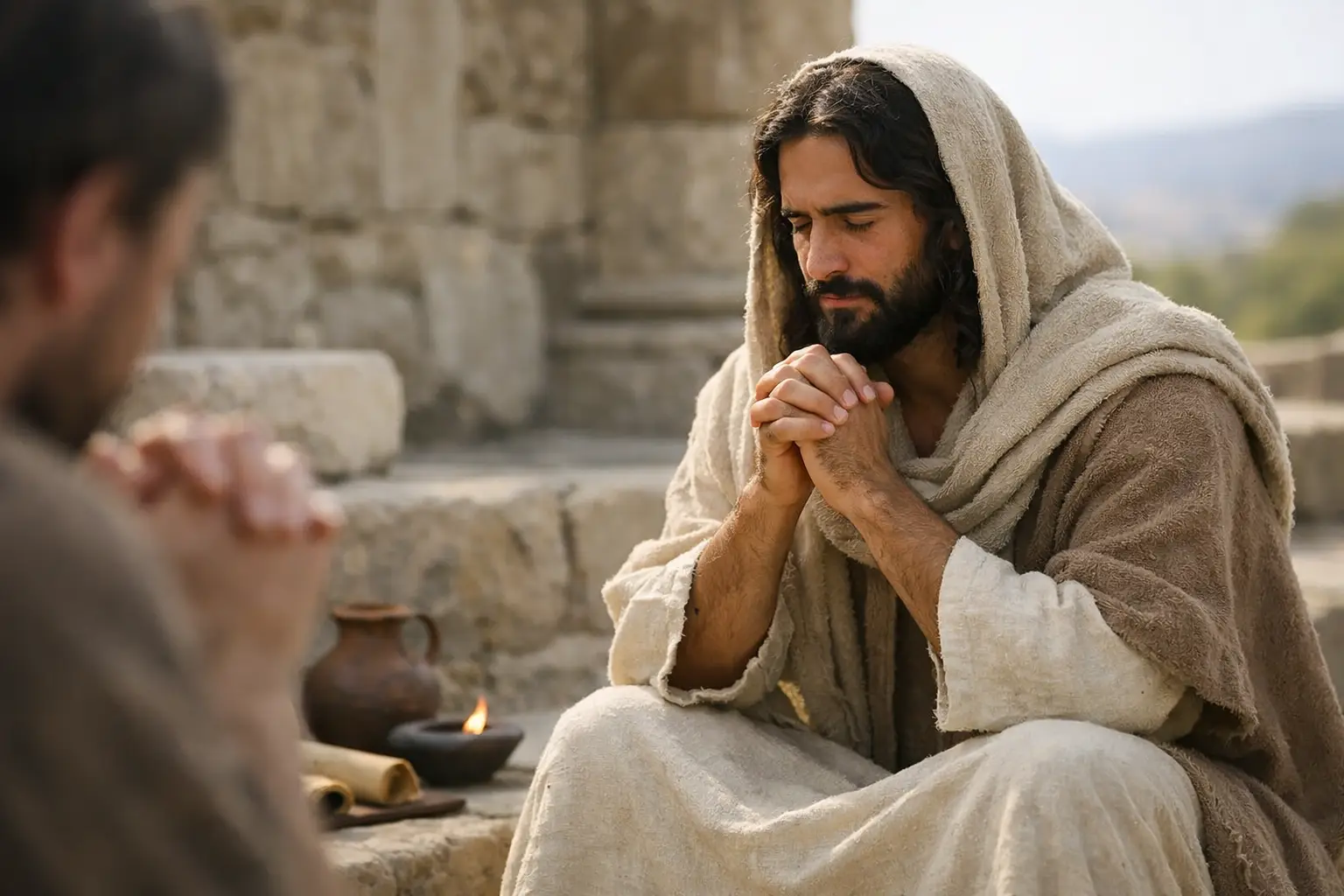
Prayer was never presented by Jesus as religious performance or a way to impress God. When we ask, “what did Jesus say about prayer,” we find clear instruction from the One who regularly withdrew to pray, taught His disciples to pray, and invited them to bring every need to the Father. His words lead us away from empty repetition and anxious striving and into a real, trusting relationship with God.
Jesus did not give His followers a technique for controlling outcomes. He taught them how to come before God: honestly, humbly, faithfully, and with hearts shaped by the Father’s will.
What Did Jesus Say About Prayer and Sincerity?
Jesus addressed prayer directly in the Sermon on the Mount. He warned His disciples not to pray in order to be noticed: “When you pray, you shall not be like the hypocrites. For they love to pray standing in the synagogues and on the corners of the streets, that they may be seen by men” (Matthew 6:5).
The issue was not public prayer itself. Jesus prayed publicly at times, and the early church prayed together. The problem was motive. A person can use spiritual language while seeking human praise rather than fellowship with God. Jesus calls His followers to a prayer life that is true before the Father, including the unseen moments when no one else is listening.
He continued, “When you pray, go into your room, and when you have shut your door, pray to your Father who is in the secret place” (Matthew 6:6). This is an invitation to personal communion, not a command that every prayer must occur alone. God sees what is hidden. He knows the need beneath the words, the grief a person cannot explain, and the desire to obey that may be expressed in only a few simple sentences.
Jesus also warned against “vain repetitions” and many words offered as though God must be persuaded to pay attention (Matthew 6:7). He said, “Your Father knows the things you have need of before you ask Him” (Matthew 6:8). Prayer does not inform an uninformed God. It is the faithful response of children who know they are welcome before their Father.
Jesus Gave a Pattern for Prayer
After correcting false approaches, Jesus gave the prayer commonly called the Lord’s Prayer in Matthew 6:9-13. His words provide a pattern that keeps prayer centered on God before it turns to our needs.
“Your kingdom come. Your will be done on earth as it is in heaven” comes before “Give us this day our daily bread.” Jesus teaches us to begin with the Father’s name, kingdom, and will. This does not make our daily concerns unimportant. Rather, it puts them in their right place. We ask for provision, but we do so as people who want God’s purposes to govern our lives.
The prayer also includes confession and forgiveness: “Forgive us our debts, as we forgive our debtors.” Jesus immediately emphasized this point, teaching that forgiveness is not a minor feature of discipleship (Matthew 6:14-15). A praying life cannot be separated from a forgiving heart. This does not mean forgiveness is always emotionally easy, especially when wounds are deep. It means followers of Jesus must not cherish revenge or refuse the mercy they themselves continually need.
Finally, Jesus taught His disciples to ask for protection from temptation and evil. Prayer is not only about receiving material provision. It is also a humble acknowledgment that we need God’s help to remain faithful.
Jesus Invited His Disciples to Ask
Jesus spoke with striking openness about bringing requests to God. In Matthew 7:7-8, He said, “Ask, and it will be given to you; seek, and you will find; knock, and it will be opened to you.” The verbs convey ongoing dependence. Jesus is not describing a casual religious gesture, but a life that keeps turning toward the Father.
He grounded this invitation in God’s fatherly goodness. If imperfect human parents know how to give good gifts to their children, “how much more will your Father who is in heaven give good things to those who ask Him” (Matthew 7:11). Luke’s account specifically highlights the gift of the Holy Spirit to those who ask (Luke 11:13).
These promises should not be treated as a guarantee that God will grant every request exactly as we imagine. Jesus Himself prayed in Gethsemane that the cup of suffering might pass from Him, yet He submitted, “Nevertheless, not as I will, but as You will” (Matthew 26:39). Faith is not demanding our preferred result. Faith asks boldly while trusting the wisdom and goodness of the Father.
That distinction matters when prayers seem unanswered. A delayed answer is not necessarily a denial, and a different answer is not evidence that God has abandoned His child. Jesus teaches us to ask, seek, and knock, while His own example teaches us to yield to the Father’s will.
Pray With Faith, Not Fear
Jesus repeatedly connected prayer with faith. When teaching about prayer after the fig tree withered, He said, “Whatever things you ask when you pray, believe that you receive them, and you will have them” (Mark 11:24). These words call believers to trust God rather than approach Him with a heart divided by unbelief.
Yet biblical faith is more than confidence that a desired event will happen. It is confidence in God Himself. Jesus did not encourage His followers to place faith in their own words, intensity, or ability to pray perfectly. He directed them to the Father.
In John 14:13-14, Jesus taught His disciples to ask in His name. To pray in Jesus’ name is not a phrase added at the end of a request. It means coming on the basis of who He is and in a manner consistent with His character, authority, and mission. A request for selfish ambition cannot rightly claim the name of the Servant King. But a believer may come with confidence because Jesus has opened the way to the Father.
Jesus Taught Persistence Without Manipulation
In Luke 11:5-10, Jesus told a parable about a man who continued asking his friend for bread at midnight. In Luke 18:1-8, He told of a widow who persistently sought justice from an unjust judge. Luke says Jesus gave that parable so His disciples “always ought to pray and not lose heart.”
Persistence is not an attempt to wear God down. Jesus contrasts God with the reluctant friend and the unjust judge. If even flawed people may eventually respond, how much more will a righteous and loving God hear His people? Persistent prayer trains the heart to keep trusting when circumstances remain unresolved.
There is wisdom here for seasons of illness, family strain, grief, guidance, or spiritual dryness. Continue to pray. Continue to bring the matter before God. At the same time, leave room for Him to answer with timing, direction, or provision different from what you expected. Persistence and surrender belong together.
Prayer Requires Humility and Forgiveness
Jesus’ parable of the Pharisee and the tax collector gives another essential lesson. The Pharisee stood confidently before God, rehearsing his religious accomplishments. The tax collector would not even lift his eyes to heaven, but prayed, “God, be merciful to me a sinner!” Jesus said the tax collector went home justified rather than the Pharisee (Luke 18:9-14).
Prayer begins with truthfulness. We do not approach God by presenting a record of our spiritual achievements. We come because of His mercy. Humility does not mean pretending we have no needs, gifts, or responsibilities. It means recognizing that every good thing we have comes from God and that we remain dependent on His grace.
Jesus also gave a searching instruction in Mark 11:25: “Whenever you stand praying, if you have anything against anyone, forgive him.” This does not minimize justice or remove the need for wise boundaries. Forgiveness does not call evil good, and reconciliation may not always be possible or safe. But Jesus will not allow His disciples to make bitterness their permanent home.
A Prayer Life Shaped by Jesus
The clearest answer to what Jesus said about prayer is found not only in His instructions but also in His example. He prayed in solitude (Luke 5:16), prayed before significant decisions (Luke 6:12-13), prayed for His disciples (John 17), and prayed even in suffering. At the cross, He prayed for those who crucified Him: “Father, forgive them” (Luke 23:34).
His example shows that prayer belongs in ordinary days, major decisions, spiritual battle, sorrow, and service to others. It can be spoken aloud, prayed quietly, offered with others, or breathed in a moment of need. The length of a prayer matters far less than the direction of the heart.
Begin where you are. Praise God for who He is. Bring Him your daily needs. Confess what needs to be confessed. Forgive as you have been forgiven. Ask with faith, and submit your desires to His will. Then keep returning to the Father Jesus revealed.
As you read the Gospels, notice not only what Jesus taught about prayer, but how He prayed. Let His words correct hurried habits, strengthen weary faith, and draw you again to the Father who sees in secret and welcomes those who come through His Son.