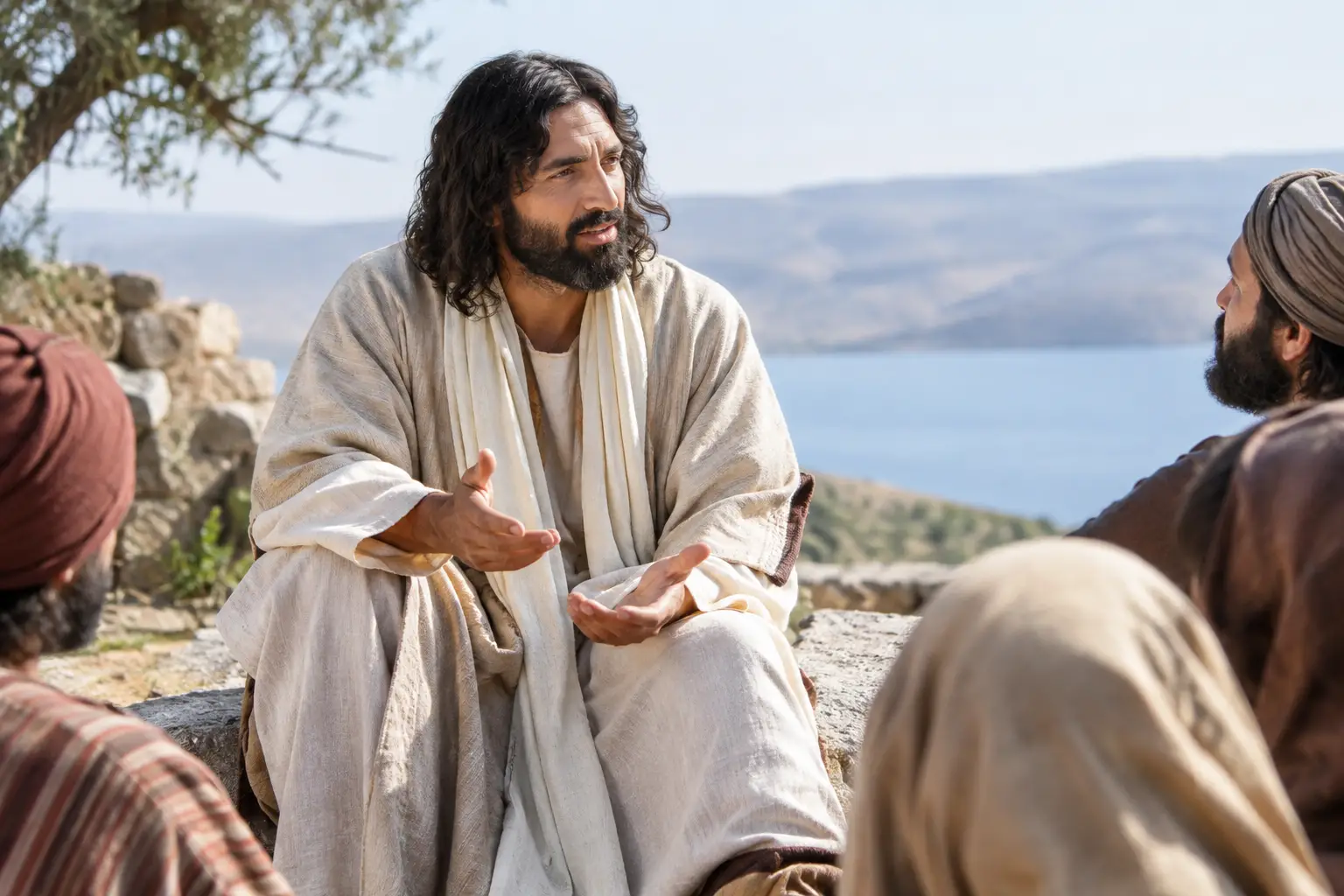
A Bible study can fill a notebook, answer a difficult question, or prepare someone to teach a class. Yet its deepest purpose is not merely to increase what we know. Scripture is meant to bring us before the living God and form a life of faithfulness. For every believer, the words of Jesus give that study its clearest center.
Jesus did not call people simply to admire His teaching. He said, “If you love me, you will keep my commandments” (John 14:15). He compared the person who hears His words and acts on them to a wise man who built his house on rock (Matthew 7:24-25). These statements give Bible study both its direction and its goal: hear Christ rightly, understand Him in context, and obey Him in daily life.
Why Bible Study Should Start With Jesus
All Scripture is inspired by God and profitable for teaching, correction, and training in righteousness (2 Timothy 3:16). The whole Bible matters. The Old Testament reveals God’s character, His covenant purposes, humanity’s need, and the promises fulfilled in Christ. The apostles explain the gospel, guide the church, and show what faithful life looks like after Jesus’ resurrection.
But Jesus Himself taught that the Scriptures bear witness about Him (John 5:39). After His resurrection, He explained to His disciples what was written about Him “in all the Scriptures” (Luke 24:27). Reading the Bible with Jesus at the center does not diminish the rest of Scripture. It helps us read each passage within the story God is telling – creation, sin, promise, redemption, and the coming kingdom of God.
Starting with the words of Jesus also protects us from treating Scripture as a collection of isolated sayings. A verse may offer comfort, challenge a habit, or answer a question, but its meaning is not decided by what we want it to say. Jesus calls His followers to receive His teaching, remain in it, and let it shape the whole person (John 8:31-32).
This approach requires humility. Some teachings of Jesus are familiar enough that we may assume we understand them before we have listened carefully. Others confront our preferences: loving enemies, forgiving those who wrong us, seeking God’s kingdom before material concerns, serving rather than pursuing status, and taking up the cross. Faithful study allows Jesus to correct us rather than asking His words to confirm us.
A Bible Study Method Rooted in Christ’s Teaching
A fruitful study does not require advanced training or a large collection of resources. It does require patience, prayer, attention to context, and a willingness to respond. The following pattern can be used alone, with a family, or in a small group.
Begin with a passage, not a conclusion
Choose a manageable section of Scripture. The Gospels are an especially strong place to begin because they preserve the words, actions, death, and resurrection of Jesus. A paragraph, a parable, a conversation, or a section from the Sermon on the Mount is often better than a single verse removed from its setting.
Before asking what the passage means to you, ask what it says. Who is speaking? Who is being addressed? What has happened immediately before this scene? What words or ideas are repeated? Is Jesus teaching disciples, responding to opponents, comforting a person in need, or speaking to a crowd?
For example, Jesus’ command, “Do not worry,” in Matthew 6:25 is not permission for carelessness. In its context, Jesus points His disciples to the Father’s care and calls them to seek first God’s kingdom and righteousness (Matthew 6:33). The command is joined to a new priority, not detached from it.
Listen for what Jesus reveals about God and His kingdom
Jesus’ teaching consistently reveals the Father’s character. In Luke 15, the parables of the lost sheep, lost coin, and lost son show God’s joy over repentance. In Matthew 5, Jesus teaches that the Father sees what is done in secret. In John 14, Jesus comforts troubled disciples by directing them to trust in God and trust in Him.
As you read, consider two questions: What does this passage reveal about God? What does it reveal about life under His reign? These questions keep study from becoming merely self-focused. They also help us see that obedience is not an attempt to earn God’s love, but a response to the grace and truth made known in Christ.
Read the wider biblical context
Jesus’ words stand within the full witness of Scripture. He quoted the Law and the Prophets, fulfilled God’s promises, and spoke in ways His first hearers would have recognized. When a passage refers to a command, a prophet, a psalm, or a biblical event, take time to read the earlier Scripture.
Consider Jesus’ answer when asked about the greatest commandment. He joined wholehearted love for God from Deuteronomy 6:5 with love for neighbor from Leviticus 19:18 (Matthew 22:37-40). The answer is unmistakably Jesus’ own teaching, while the Old Testament provides the foundation and context He affirmed.
The New Testament letters are equally valuable for understanding how the earliest Christians lived in light of Christ’s teaching. Paul’s instruction to forgive one another “as God in Christ forgave you” (Ephesians 4:32) harmonizes with Jesus’ repeated call to forgive. James’ concern for hearing and doing the word reflects the same obedience Jesus described. Scripture illuminates Scripture when we allow it to speak in its proper setting.
Ask what obedience looks like today
Application should be specific, but it must grow from the passage rather than being forced onto it. A good question is not only, “What did I learn?” but also, “What response does Jesus call for?” Sometimes the response is repentance. Sometimes it is faith in a promise, reconciliation with another person, generosity, patient endurance, or a change in the way we pray.
If you are studying Jesus’ teaching on forgiveness, application may involve naming a resentment honestly before God and choosing to release the desire for personal revenge. That does not mean ignoring wrongdoing, denying harm, or remaining in an unsafe situation. Forgiveness and wise boundaries are not opposites. The particular circumstances may require counsel, accountability, or help from trusted church leaders. Yet Jesus’ command still directs the heart away from bitterness and toward mercy.
Write one clear response in a sentence. “This week I will contact the person I have avoided and seek peace where possible.” Or, “Before I make this decision, I will pray about whether I am seeking God’s kingdom or protecting my own comfort.” Specific obedience turns study from an abstract exercise into discipleship.
Pray the truth you have received
Bible study is not finished when the final observation is written down. Bring the passage back to God in prayer. Thank Him for what it reveals, confess where your life is out of step with Christ, ask for wisdom and strength, and pray for others who need the same truth.
Prayer also guards against pride. Knowledge can become a reason to feel superior if it is not joined to love and obedience. Jesus taught that apart from Him, His disciples could do nothing (John 15:5). Even the clearest understanding needs the work of the Holy Spirit to produce lasting fruit.
Common Obstacles to Faithful Study
Many believers feel discouraged because their study is inconsistent or because a passage seems difficult. Difficulty is not failure. Some parts of Scripture yield their meaning quickly; others call for repeated reading, patient comparison, and help from mature teachers. The goal is not to finish quickly but to become a faithful learner of Christ.
One common obstacle is approaching the Bible only when a crisis comes. God certainly meets us in crisis, and His Word offers real comfort. But a steady pattern of reading prepares the heart before hardship arrives. Even ten attentive minutes in a Gospel passage can be more formative than hurried reading through several chapters without reflection.
Another obstacle is studying only for information. Historical setting, word meanings, and cross-references are useful, but they are servants, not the destination. Jesus warned religious leaders who searched the Scriptures while refusing to come to Him for life (John 5:39-40). We should never separate careful biblical learning from trust in the One to whom Scripture points.
A third obstacle is attempting to obey alone. Personal study is essential, but Christ formed a people, not merely isolated individuals. Reading Scripture with other believers can expose blind spots, encourage perseverance, and create opportunities to practice love, patience, confession, and service. A wise group does not replace personal responsibility before God, but it can strengthen it.
Let the Words of Jesus Remain With You
Jesus said that those who remain in His word are truly His disciples (John 8:31). Remaining suggests more than an occasional encounter. It is a settled, continuing relationship with His teaching. We return to His words when we are uncertain, when we are tempted, when we are encouraged, and when we need to remember what kind of people He is forming us to be.
Choose one teaching of Jesus this week and stay with it. Read the passage slowly several times. Notice its setting. Read the supporting Scriptures. Pray honestly about where it meets your life, and take one faithful step in response. Then continue to learn with the confidence that God’s Word is not given merely to be collected, but to lead us into the life Jesus teaches.
Leave a Reply