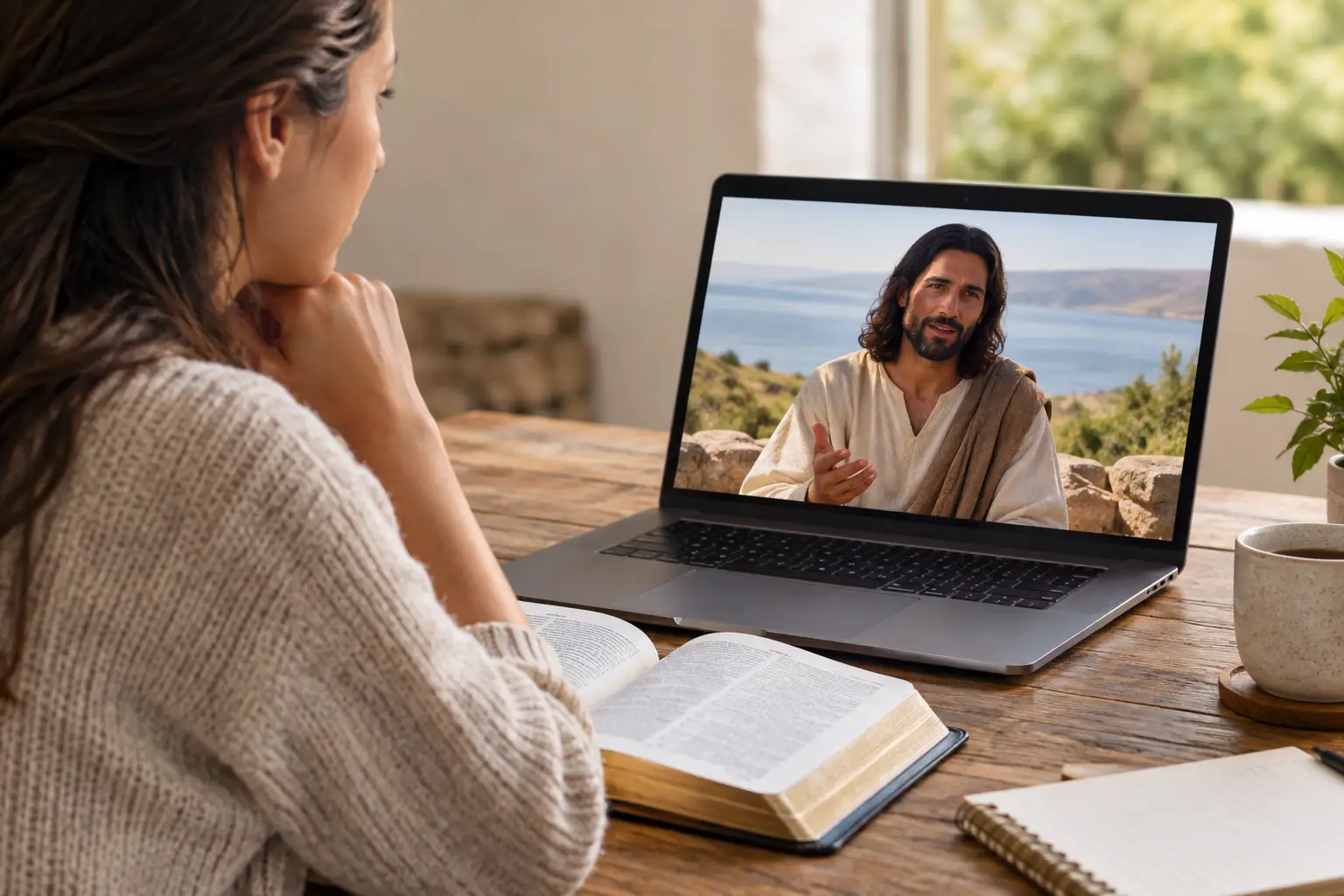
A Bible study video can end in a few minutes, but the real question begins when the screen goes dark: What will you do with the words of Jesus you have just heard? Helpful teaching can clarify a difficult passage, introduce needed context, and encourage a weary believer. Yet Bible study videos serve their purpose only when they move us beyond watching and into prayerful study, faithful obedience, and a closer walk with Christ.
Jesus described the wise person as one who hears His words and puts them into practice (Matthew 7:24). That picture gives us a needed standard for every sermon, lesson, devotional, or video study. The goal is not simply to gain information about the Bible. It is to hear Christ rightly and build our lives on what He says.
What Bible Study Videos Are Meant to Do
Video teaching can be a meaningful aid for believers at many stages of faith. A new Christian may need help seeing how the Gospels fit together. A small-group leader may benefit from a clear introduction to a passage. A mature student of Scripture may appreciate historical background or a thoughtful explanation of a difficult text.
These are real benefits, especially when access to a local class or trusted teacher is limited. Video can bring sound instruction into homes, workplaces, hospitals, and places where believers are geographically separated from Christian community.
Still, a video is a servant, not a substitute for Scripture. No presenter, however gifted, can do the personal work of reading God’s Word, considering its context, praying for understanding, and responding to the Lord. Jesus prayed to the Father, “Your word is truth” (John 17:17). The authority belongs to God’s Word, not to a personality, production style, or popular opinion.
That distinction protects us from two opposite errors. One is treating every online teacher with suspicion simply because the teaching is delivered through media. The other is assuming a video is trustworthy because it is polished, popular, or emotionally compelling. Christians are called to test what they hear by Scripture, with humility and care.
How to Choose Bible Study Videos That Keep Christ at the Center
The best question is not, “Was this interesting?” It is, “Did this help me understand and obey the Word of God?” Interest may draw us to a lesson, but biblical faithfulness must determine whether we keep listening.
Begin With What Jesus Actually Said
When a study addresses Christian living, prayer, forgiveness, discipleship, anxiety, money, leadership, or relationships, begin with the teaching of Jesus. Read the Gospel passage for yourself before or after viewing. Notice whom Jesus was addressing, what question or situation prompted His words, and how His instruction connects with the larger message of the Gospel.
For example, Jesus’ command to forgive is not a vague call to be agreeable. In Matthew 18, His teaching comes in a conversation about sin, mercy, accountability, and the immeasurable forgiveness God extends to His people. A worthwhile video should help viewers see that context rather than reducing the passage to a slogan.
The rest of Scripture helps us understand, apply, and live in harmony with Christ’s words. The apostles did not move away from Jesus’ teaching. They proclaimed the risen Lord and instructed the church in the life He commanded. Good Bible teaching lets Scripture illuminate Scripture while keeping Jesus at the center.
Look for Careful Context
A faithful teacher explains a passage instead of borrowing a phrase from it to support a preferred message. Context includes the verses before and after, the book’s purpose, the original audience, and the place of the passage within the whole biblical story.
This does not mean every video must feel like a seminary lecture. Clear teaching can be simple. But simple is not the same as shallow. A brief study can still read the text carefully, distinguish observation from application, and acknowledge when a passage requires further thought.
Be cautious when a lesson makes sweeping promises God has not made, turns every passage into a message about personal success, or treats a teacher’s experience as the final authority. Scripture comforts us, corrects us, and gives us hope, but it also calls us to repentance, humility, self-denial, and perseverance.
Consider the Fruit It Encourages
Jesus said that false prophets are recognized by their fruit (Matthew 7:15-20). This principle calls for discernment, not quick accusations. Ask what the teaching consistently produces. Does it encourage love for God and neighbor? Does it lead people toward truth, holiness, prayer, service, and obedience? Does it honor Christ rather than building dependence on a public figure?
A video may be engaging and still leave viewers centered on themselves. By contrast, Christ-centered teaching draws attention to who Jesus is, what He has done, what He commands, and how His grace changes the way we live.
A Prayerful Way to Watch and Study
Watching with a Bible open changes the experience. Rather than receiving a lesson passively, you become an active student of God’s Word. This approach takes more time than letting several videos play in the background, but it bears better fruit.
A simple four-part practice can help:
- Read the passage first. Read it slowly, preferably in its larger section. Write down what stands out before hearing the teacher’s explanation.
- Watch with discernment. Notice the main claim being made. Ask whether the teacher explains the text clearly and whether the application follows from the passage.
- Search the Scriptures. Read the references used in the lesson. If a point seems unclear, compare it with related passages, especially the teachings of Jesus.
- Respond in obedience. Pray about one specific way to apply what you have learned. It may involve forgiveness, truthfulness, generosity, reconciliation, prayer, or a changed attitude.
This pattern reflects the example of the Bereans, who received teaching eagerly while examining the Scriptures to see whether what they heard was true (Acts 17:11). Eagerness and discernment belong together. We do not need to be cynical, but neither should we be careless.
When Video Helps Most, and When It Does Not
Bible study videos are especially useful when they support a defined purpose. You may be studying one Gospel, preparing to lead a discussion, seeking help with a difficult passage, or building a regular habit of Scripture study. In each case, a focused lesson can provide structure and encouragement.
They can also serve churches and small groups well. A short teaching segment may give a group a common starting point, particularly when followed by Bible reading, thoughtful discussion, and prayer. The video should not carry the whole gathering. People grow as they open Scripture together, ask honest questions, bear one another’s burdens, and encourage one another toward faithfulness.
There are trade-offs. Short videos may be accessible but cannot address every question. Longer studies may offer depth but require patience and time. A teacher may be strong in explaining background yet less helpful in practical application. No single format meets every need, and no online resource replaces the ongoing care of a faithful local church.
It is also wise to consider what video habits are forming in us. If we are always moving to the next lesson, we may confuse spiritual consumption with spiritual growth. Jesus did not call His disciples merely to collect teaching. He called them to follow Him. Sometimes the most faithful response to a study is to pause, reread a few verses, pray, and obey before watching anything else.
Let the Words of Jesus Lead the Way
The abundance of Christian media can be a gift, but abundance requires wisdom. Choose Bible study videos that treat Scripture with reverence, explain it in context, and direct your attention to Jesus Christ. Receive helpful teaching with gratitude, but keep your Bible open and your heart ready to obey.
Jesus asked, “Why do you call me ‘Lord, Lord,’ and do not do what I say?” (Luke 6:46). It is a searching question for every viewer and every teacher. The lasting value of a Bible study is not measured by how much content we finish. It is seen as Christ’s words take root in us and shape the way we love, pray, serve, forgive, and follow Him.
As you choose your next study, begin with a passage from the Gospels. Listen carefully to Jesus, read the wider Scriptures that support His teaching, and ask the Lord for grace to live what you learn.
Leave a Reply