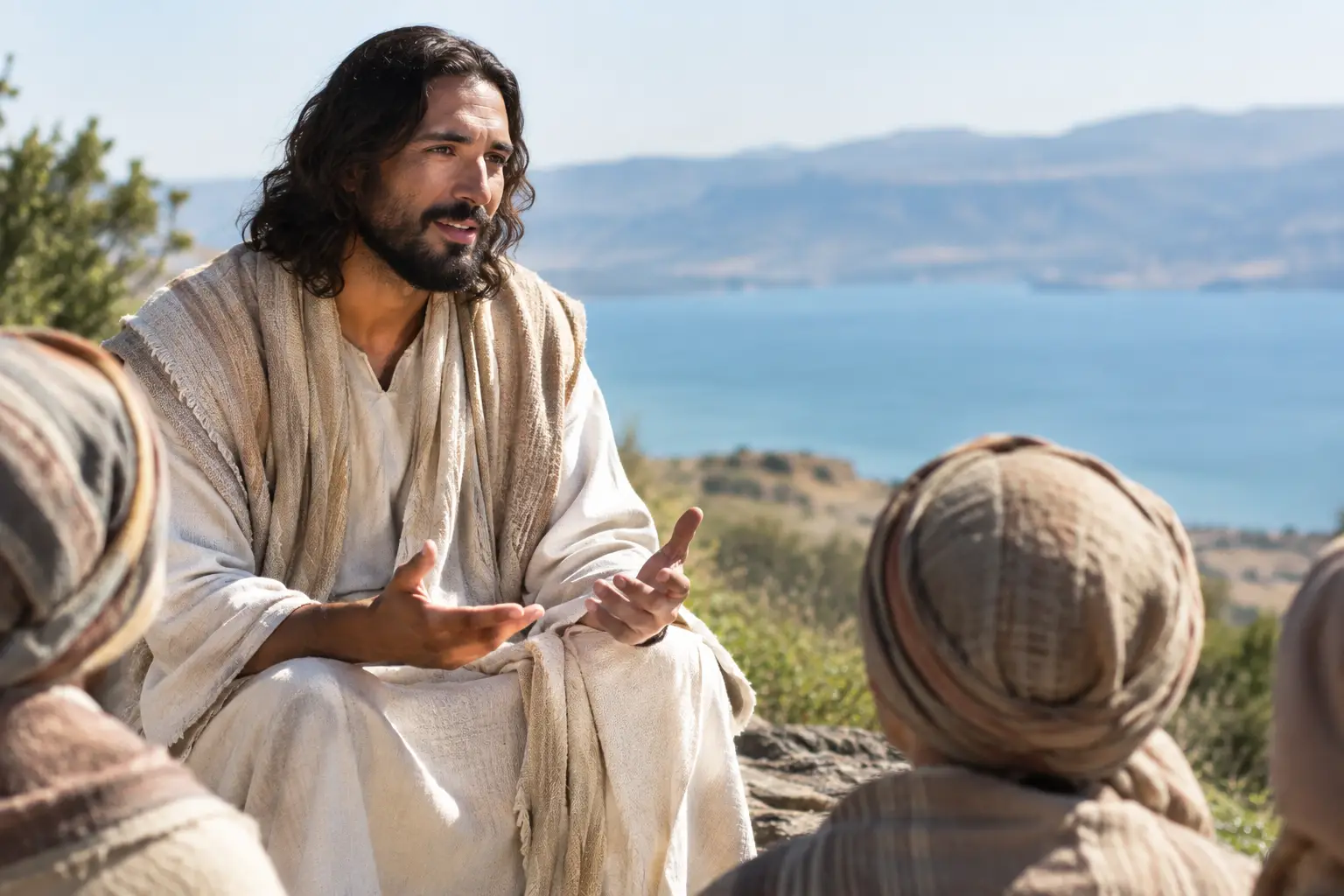
John does not begin with a manger, a genealogy, or a call to repentance in the wilderness. He begins before creation: “In the beginning was the Word” (John 1:1). A faithful Gospel of John study guide starts there, with the conviction that Jesus is not merely a wise teacher to admire. He is the eternal Word made flesh, sent so that people may know the Father and receive life through believing in Him.
John tells us why he wrote. After recording selected signs of Jesus, he says, “These are written so that you may believe that Jesus is the Christ, the Son of God, and that by believing you may have life in his name” (John 20:31). That purpose should shape every chapter you read. The goal is not simply to collect information about Jesus. It is to hear His words, see His works, trust who He is, and walk in the life He gives.
How to Use This Gospel of John Study Guide
John’s Gospel rewards slow reading. Its language is often simple, but its meaning is deep. Words such as life, light, truth, glory, believe, love, witness, and abide return throughout the book. When John repeats a word or idea, pause. Repetition is one way he directs us to what matters most.
Read one section at a time rather than rushing through several chapters. A section may be a conversation, a miracle, a public teaching, or a scene from Jesus’ final hours. Read it once for the overall movement, then read it again with Jesus’ words in view. Ask what He reveals about Himself, what He says about the Father, and what response He calls for from those listening.
Keep your Bible open to the passage as you study. Notes and resources can be helpful, especially for historical background, but they should serve the text rather than speak over it. John invites us to encounter Jesus directly through the testimony of Scripture.
Four questions can keep your study focused:
- What does this passage reveal about Jesus’ identity?
- What does Jesus actually say, command, promise, or warn?
- How do the people in the passage respond to Him?
- What would believing Jesus look like in my decisions, relationships, and worship?
These questions prevent John from becoming only a theological discussion. His Gospel continually brings the reader to a personal response.
Begin With John’s Purpose and Witness
The opening chapter introduces major themes that will unfold through the entire Gospel. Jesus is the Word, the true Light, the Lamb of God, the Messiah, the Son of God, and the King of Israel. John the Baptist is equally clear about his own role: he is not the Christ. He is a witness who points away from himself and toward Jesus (John 1:6-8, 19-34).
That pattern matters for every Christian teacher, church leader, and disciple. Faithful witness does not build its message around human personalities. It directs attention to Christ. When two disciples hear John the Baptist identify Jesus as the Lamb of God, they follow Jesus. His first recorded question to them is searching and personal: “What are you seeking?” (John 1:38).
Let that question accompany your study. Are you seeking answers, comfort, direction, forgiveness, or a deeper knowledge of God? Jesus does not dismiss those needs. Yet John shows that the deepest answer is found in coming to Him, remaining with Him, and seeing who He truly is.
Watch the Signs, Then Hear Their Meaning
John records seven major signs before Jesus’ resurrection: turning water into wine, healing an official’s son, healing a man at Bethesda, feeding the five thousand, walking on water, giving sight to a man born blind, and raising Lazarus. These works display real compassion and divine authority, but John calls them signs because they point beyond themselves.
For example, the feeding of the five thousand is not simply a lesson about provision. It leads into Jesus’ declaration, “I am the bread of life” (John 6:35). The healing of the man born blind is followed by Jesus’ teaching about spiritual sight and blindness (John 9). Lazarus coming from the tomb prepares readers to hear Jesus say, “I am the resurrection and the life” (John 11:25).
When you study a sign, resist stopping at the miracle itself. Ask what it reveals about Jesus and why the surrounding conversation is included. John often places a long teaching beside a dramatic event because the words explain the work.
There is also a sobering truth here. Many people saw Jesus’ signs without coming to enduring faith. Some wanted bread, spectacle, or relief from immediate trouble. Others feared the cost of identifying with Him. Seeing evidence is not the same as surrendering to the truth. John calls us beyond curiosity to believing trust.
Listen Closely to Jesus’ I Am Sayings
The Gospel of John gives special attention to Jesus’ statements about Himself. He says, “I am the bread of life,” “the light of the world,” “the door,” “the good shepherd,” “the resurrection and the life,” “the way, and the truth, and the life,” and “the true vine.” Each image speaks to a real human need, but each also reveals His unique authority.
Jesus is not one source of spiritual nourishment among many. He is the bread of life. He does not merely offer helpful guidance through moral confusion. He is the light of the world and the way to the Father. His statement in John 14:6 is both gracious and decisive: “No one comes to the Father except through me.”
Read these sayings in their immediate setting. Jesus calls Himself the good shepherd in a context where religious leaders had failed to care for God’s people. He calls Himself the true vine as He prepares His disciples for life after His departure. The images are not isolated devotional phrases. They are words spoken to people facing hunger, darkness, fear, opposition, grief, and uncertainty.
Let the Farewell Teaching Shape Daily Discipleship
John 13-17 brings us into Jesus’ final evening with His disciples before His arrest. These chapters are among the clearest places to study how Jesus defines the life of His followers.
Jesus begins by washing His disciples’ feet. The Lord and Teacher takes the place of a servant, then tells them to do likewise (John 13:14-15). Christian leadership, family life, ministry, and personal ambition must all be examined in that light. Jesus does not call His people to pursue status. He calls them to love through humble service.
He gives a new commandment: “Love one another: just as I have loved you” (John 13:34). This love is not vague approval or mere sentiment. It is shaped by Jesus’ sacrificial love, truthfulness, patience, and obedience to the Father. In John 15, He connects fruitful living to abiding in Him. Branches do not manufacture life by effort alone. They remain connected to the vine.
This is a needed balance. Obedience matters deeply in John’s Gospel: “If you love me, you will keep my commandments” (John 14:15). Yet obedience grows from abiding in Christ, not from trying to earn His acceptance. The disciple receives His word, trusts His love, and bears fruit through dependence on Him.
Read the Cross and Resurrection as John’s Climax
John presents the cross not as Jesus losing control, but as the hour in which He willingly fulfills the Father’s saving purpose. Jesus says that no one takes His life from Him, but that He lays it down of His own accord (John 10:18). At the cross, His love, obedience, kingship, and glory are revealed together.
Do not move too quickly past John 18-20. Notice Jesus’ calm authority before His accusers, His care for His mother, His declaration that the work is finished, and the testimony surrounding His death. Then read the resurrection accounts with equal attention. Mary Magdalene, the disciples, Thomas, and Peter each meet the risen Christ in ways that address sorrow, fear, doubt, failure, and calling.
Thomas’ confession provides one of John’s highest declarations of faith: “My Lord and my God!” (John 20:28). Jesus responds by blessing those who have not seen and yet have believed. John’s Gospel now places that invitation before every reader.
A Simple Four-Week Reading Path
For a personal study, read John 1-5 in the first week, John 6-12 in the second, John 13-17 in the third, and John 18-21 in the fourth. This pace leaves room to reread key conversations and pray through Jesus’ teachings. A small group may choose a slower pace, especially through chapters 13-17, where each paragraph deserves careful discussion.
Write down one truth about Jesus and one response He calls you to make after each reading. The response may involve faith, repentance, forgiveness, courageous witness, humble service, or patient obedience. Be specific. If Jesus teaches you to love as He loved, consider where that love needs to become visible this week.
As you finish John, return to Jesus’ question: “What are you seeking?” Bring your answer honestly before Him. Then continue in His words. JesusSaid.tv exists to help believers do just that: hear Christ clearly, understand Scripture faithfully, and live under the authority of the One who said, “Follow me.”
Leave a Reply