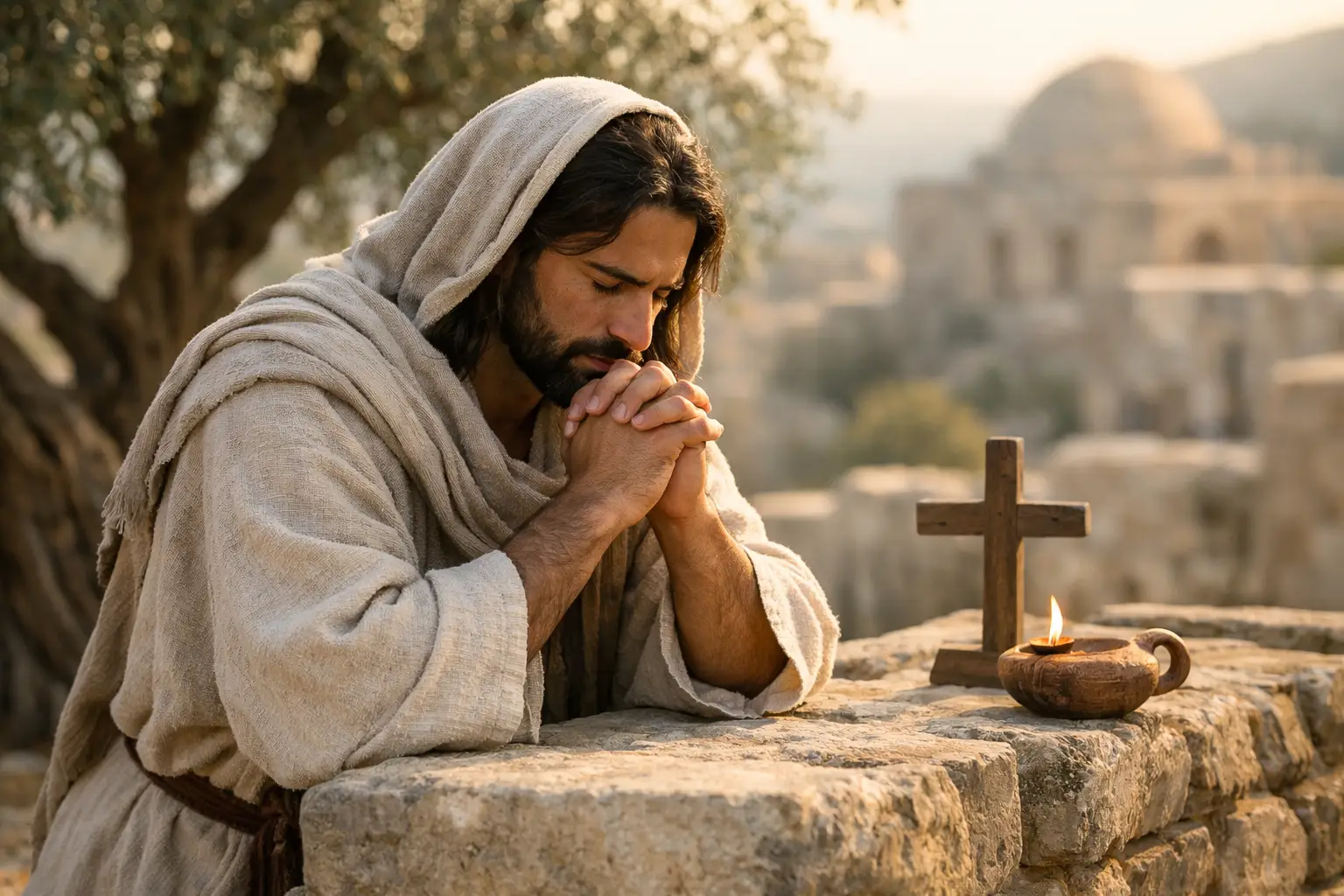
When Jesus’ disciples asked, “Lord, teach us to pray,” they were not asking for religious language to repeat in public. They had watched Him pray. They had seen that prayer was central to His relationship with the Father. The Jesus prayer teachings recorded in the Gospels show us more than what to say. They show us how to come to God: sincerely, trustingly, obediently, and with hearts shaped by His will.
Jesus did not present prayer as a way to impress others, control outcomes, or earn God’s attention. He taught His followers to know the Father, seek His kingdom, bring real needs before Him, forgive as they have been forgiven, and remain faithful when answers seem delayed.
Jesus Prayer Teachings Begin With the Father
In the Sermon on the Mount, Jesus warned against praying for display. “When you pray,” He said, “do not be like the hypocrites,” who pray publicly in order to be noticed. Instead, He instructed His disciples to pray to their Father “who is in secret” (Matthew 6:5-6).
This does not condemn public prayer. Jesus Himself gave thanks before crowds, and the early church prayed together. His concern was motive. Prayer becomes distorted when it is aimed at human approval rather than fellowship with God.
Jesus also rejected empty repetition. In Matthew 6:7-8, He cautioned against thinking that many words will guarantee an answer. The Father already knows what His children need before they ask. That truth does not make prayer unnecessary. It makes prayer secure. We pray not to inform a distant God, but because our Father invites us to bring our lives before Him.
For many believers, this corrects two opposite errors. One is to avoid prayer because God already knows. The other is to think that the right length, intensity, or wording will force an answer. Jesus teaches a better way: come honestly to the Father who knows, sees, and cares.
The Lord’s Prayer Is a Pattern for Life
Jesus then gave what is commonly called the Lord’s Prayer in Matthew 6:9-13 and Luke 11:2-4. These words are worthy of being prayed, remembered, and treasured. Yet the surrounding teaching also shows that Jesus gave a pattern that forms the whole life of prayer, not merely a formula to be recited without thought.
The prayer begins, “Our Father in heaven, hallowed be your name.” Before bringing personal requests, Jesus directs attention to God’s name, character, and holiness. Prayer begins with God, not with our urgency.
“Your kingdom come, your will be done, on earth as it is in heaven” places our desires under God’s reign. This is not passive resignation. It is a deliberate request that God’s purposes would govern our homes, work, churches, decisions, and witness. We may ask boldly for specific needs, but we do so as servants who want God’s will above our own.
“Give us this day our daily bread” teaches dependence. Jesus invites His followers to bring ordinary needs to the Father: provision, strength, wisdom, work, healing, and daily care. The language is simple because dependence is meant to be daily. We do not need to pretend that material needs are beneath God’s concern.
Then Jesus addresses forgiveness: “Forgive us our debts, as we also have forgiven our debtors.” He follows this with a serious explanation in Matthew 6:14-15 about forgiving others. Forgiveness does not excuse evil or erase the need for justice and wise boundaries. But a disciple of Jesus cannot cherish revenge while asking to live in the mercy of God. Prayer exposes what we are holding in our hearts.
The final petition asks for protection from temptation and evil. Jesus understood that His followers would face spiritual conflict, weakness, and testing. Prayer is not an escape from responsibility. It is one way God prepares us to walk faithfully within it.
A prayer that reshapes the person praying
The Lord’s Prayer is powerful because it reorders us. It teaches worship before self-focus, surrender before demand, daily dependence rather than self-sufficiency, mercy rather than resentment, and vigilance rather than carelessness. A person can speak these words in less than a minute, then spend a lifetime learning to live them.
Ask With Faith and Persistence
Jesus repeatedly encouraged His followers to ask. In Matthew 7:7-11, He says, “Ask, and it will be given to you; seek, and you will find; knock, and it will be opened to you.” His point rests on the goodness of the Father. If imperfect earthly parents give good gifts to their children, how much more will the Father give good things to those who ask Him.
In Luke 11, immediately after teaching the Lord’s Prayer, Jesus tells a story about a man who continues asking his neighbor for bread. He then repeats: ask, seek, and knock. Persistence is not a technique for wearing God down. God is not reluctant, irritated, or uninformed. Persistent prayer expresses continuing dependence and a refusal to turn away from God when the need remains.
Jesus also spoke about faith in prayer. Mark 11:24 says, “Whatever you ask in prayer, believe that you have received it, and it will be yours.” These words should be received with confidence, but also read in their context. Just before this, Jesus teaches about faith in God and immediately speaks about forgiving others (Mark 11:22-25). Faith is not faith in the force of our desire. It is faith in God.
That distinction matters. Jesus never teaches us to treat prayer as a blank check for every ambition. He teaches us to trust the Father, forgive others, seek God’s kingdom, and abide in Him. Christian faith prays expectantly because God is able and good, while trusting His wisdom when His answer is yes, no, or not yet.
Jesus Prayed With Surrender in Suffering
No study of prayer should pass quickly over Gethsemane. Facing the cross, Jesus prayed, “My Father, if it be possible, let this cup pass from me; nevertheless, not as I will, but as you will” (Matthew 26:39).
Here Jesus gives His followers words for seasons of deep sorrow. He did not deny the anguish before Him. He did not disguise His request with detached language. He brought the full weight of His grief to the Father. Yet His honest request remained joined to complete obedience.
This is one of the clearest answers to the mistaken idea that faith means never asking God to remove suffering. Jesus asked. But He also surrendered. Faithful prayer makes room for both: “Father, this is what I desire and need,” and “Father, Your will is wiser than mine.”
The Father’s will did not spare Jesus from the cross, but the cross was not abandonment or defeat. Through Christ’s obedient sacrifice came redemption. We should be careful not to make easy explanations for another person’s pain. Still, Gethsemane assures believers that suffering can be brought directly to God and that obedience remains meaningful even when the path is costly.
Praying in Jesus’ Name Means Remaining in Him
In John 14-16, Jesus tells His disciples to ask in His name. These promises are precious, but “in Jesus’ name” is more than a phrase added at the end of a prayer. Jesus connects answered prayer with loving Him, keeping His commands, abiding in Him, and bearing fruit (John 14:13-15; 15:7-8, 16).
To pray in Jesus’ name is to come to the Father on the basis of who Jesus is and what He has done. It is to ask as His disciple, seeking what honors Him and serves His purposes. The words “in Jesus’ name” may rightly be spoken, but their meaning calls for a life that is being formed by Christ.
This keeps prayer centered on Him. We are not approaching God through personal merit, spiritual performance, or perfect emotional strength. We come through Jesus Christ. And as we remain in His words, our desires increasingly learn His priorities.
A Simple Way to Practice Jesus’ Teaching on Prayer
Begin with one Gospel passage where Jesus teaches or models prayer. Read it slowly, asking what it reveals about the Father, about Jesus, and about the posture of a disciple. Then turn the passage into your own prayer.
You might begin with praise for God’s name, ask for His will in a specific situation, bring today’s needs to Him, name anyone you need to forgive, and ask for strength against temptation. Keep the prayer honest. If grief, doubt, or disappointment is present, bring that to God as Jesus did in Gethsemane.
Prayer is not measured chiefly by eloquence. Jesus calls us to the Father with reverence, confidence, persistence, and surrender. Open one of the Gospel accounts this week, listen again to what Jesus said about prayer, and let His words guide your next conversation with God.