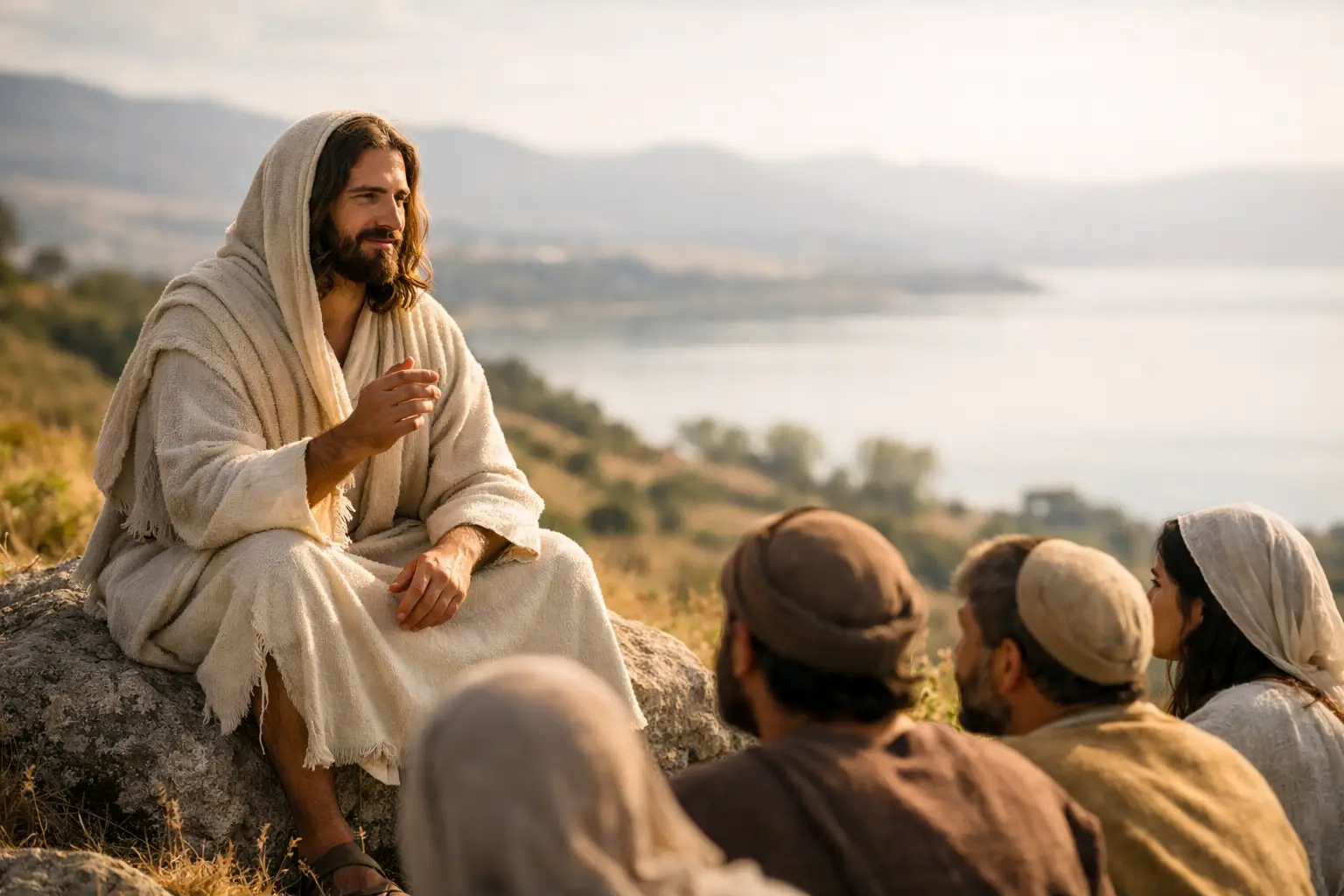
When people ask, what was jesus most important message, they are usually trying to do something wise. They are looking past isolated sayings and asking what stood at the very center of His ministry. That question matters, because Jesus did not come merely to offer scattered moral advice. He came proclaiming truth that calls for a response, reveals the Father, and reorients a person’s entire life.
If we listen carefully to His own words, one theme rises to the top again and again: the kingdom of God has come near, and people must repent, believe, and follow Him. That message is not separate from His commands to love God, love neighbor, forgive others, seek righteousness, or abide in Him. It is the larger reality that holds all of those teachings together.
What Was Jesus Most Important Message in His Own Words?
At the beginning of His public ministry, Jesus spoke with striking clarity: “The time is fulfilled, and the kingdom of God is at hand; repent and believe in the gospel” (Mark 1:15). That statement is one of the clearest windows into His central message.
Jesus announced that God’s reign was drawing near in a decisive way. This was not simply a political program or a vague spiritual feeling. The kingdom of God meant that God was acting through His promised Messiah, confronting sin, calling people back to Himself, and beginning the work that would reach its fulfillment through Jesus’ death, resurrection, ascension, and future return.
That is why repentance and faith were necessary responses. Jesus did not preach self-improvement without surrender. He called people to turn from sin, turn toward God, and trust the good news He proclaimed.
The Kingdom of God Was Central
If someone were to read the Gospels from start to finish, one pattern would become obvious. Jesus consistently taught about the kingdom. He preached it publicly, described it in parables, demonstrated its power through miracles, and taught His disciples to pray for its fullness when He said, “Your kingdom come.”
The kingdom of God was central because Jesus Himself stood at the center of it. He was not only announcing a message. He was the King through whom God’s saving rule was being revealed. That helps explain why people cannot reduce His teaching to “be nice” or “love everybody” while ignoring His authority, His call to repentance, and His identity as the Son of God.
At the same time, the kingdom was not merely future. Jesus said it had drawn near. In Him, the reign of God was breaking into the present. Yet its final fullness still lies ahead. This is one reason some readers find Jesus’ message difficult at first. His teaching contains both present reality and future hope. The kingdom is here, and the kingdom is coming.
Love Was Not a Different Message
Some people would answer the question differently and say that Jesus’ most important message was love. There is strong biblical reason for that answer, but it needs to be understood correctly.
When Jesus was asked about the greatest commandment, He answered by joining two truths together: love the Lord your God with all your heart, soul, and mind, and love your neighbor as yourself. He also told His disciples that they should love one another as He had loved them.
That is not a side note in His teaching. It is essential. But in Jesus’ ministry, love is not detached from truth, holiness, obedience, or the kingdom of God. He did not preach love as mere affirmation. He taught love that fulfills God’s law, seeks another person’s good, forgives enemies, tells the truth, and remains rooted in devotion to the Father.
So if we say His message was about love, we should say more. Jesus taught that the kingdom of God calls people into right relationship with God and neighbor, and that life is marked by love flowing from repentance and faith.
Repentance Was a Loving Word
Modern readers sometimes hear the word repentance as harsh or negative. Jesus did not treat it that way. He used it as a merciful summons. To repent is to turn. It means acknowledging that our own path is wrong and returning to God.
This is one reason Jesus’ message still confronts every generation. He did not simply tell people to add spiritual language to an unchanged life. He called tax collectors, religious leaders, the immoral, the respectable, the poor, and the powerful alike to change course before God.
That call remains urgent. A gospel with no repentance may sound easier, but it is not the gospel Jesus preached. His words expose sin not to destroy hope, but to open the way to forgiveness, restoration, and life.
Faith in Him Was Essential
Jesus did more than proclaim God’s kingdom in general terms. He repeatedly placed faith in Himself at the center of a person’s response. He called people to follow Him, believe in Him, come to Him, and abide in Him. He forgave sins, received worship, and taught that eternal life is found in knowing the only true God and Jesus Christ whom He sent.
This matters when asking what was jesus most important message. His message was not merely, “God exists, so live better.” It was that God’s saving reign had drawn near through Him, and people must respond to Him personally.
That is where some popular summaries fall short. Jesus was certainly a teacher of ethics, compassion, and justice. But He was never only that. His words make claims that force every listener to reckon with His identity and authority.
How the Cross and Resurrection Clarify His Message
If we only looked at the earliest scenes in the Gospels, we might say Jesus’ central message was the kingdom of God and stop there. But the rest of the New Testament shows that the kingdom message reaches its clearest expression through the cross and resurrection.
Jesus came to give His life as a ransom for many. At the Last Supper, He spoke of His blood of the covenant poured out for many for the forgiveness of sins. After His resurrection, the apostles preached repentance and forgiveness in His name.
This does not replace Jesus’ message. It reveals how that message is accomplished. The kingdom comes through the King who suffers, dies, rises, and will come again. Repentance and faith are not abstract religious duties. They are responses to the saving work of Christ.
Why Believers Emphasize Different Parts
Faithful Christians sometimes answer this question with different wording because Jesus’ teaching is rich and unified. One person may emphasize the kingdom of God. Another may point to love. Another may say salvation, eternal life, or reconciliation with God.
In a sense, each is touching part of the same center. The kingdom of God is the framework. Repentance and faith are the response. Love is the fruit. Salvation is the result of His redemptive work received by faith. Eternal life is the promise given to those who believe.
Problems usually begin when one part is isolated from the others. Love without repentance becomes sentimental. Kingdom without the cross becomes vague. Faith without obedience becomes shallow. Morality without Christ becomes legalism.
Jesus held these truths together perfectly.
What His Most Important Message Means for Us Now
Jesus’ central message is not only something to define. It is something to receive. If the kingdom of God has drawn near in Christ, then neutrality is not a real option. His words call each person to repent, believe the gospel, and live under His gracious authority.
For the believer, that means Christianity is not merely agreement with a set of doctrines, though doctrine matters deeply. It is a life ordered around the words of Jesus. It means loving God above all, loving others sacrificially, seeking first His kingdom, and trusting that His reign is better than our own self-rule.
For the seeker, it means Jesus’ message is both searching and hopeful. He tells the truth about sin, but He also opens the door to mercy. He does not flatter human goodness, yet He welcomes those who come to Him in faith.
For pastors, teachers, and churches, it is a needed reminder. We serve people best when we keep returning to the words of Christ Himself and let the rest of Scripture illuminate and support what He taught.
So what was jesus most important message? The clearest answer is that Jesus announced the kingdom of God, called people to repent and believe, and invited them into a life of loving obedience rooted in faith in Him. If you want to keep growing in that understanding, stay close to the Gospels, listen carefully to His words, and let His teaching shape the way you think, worship, and live.