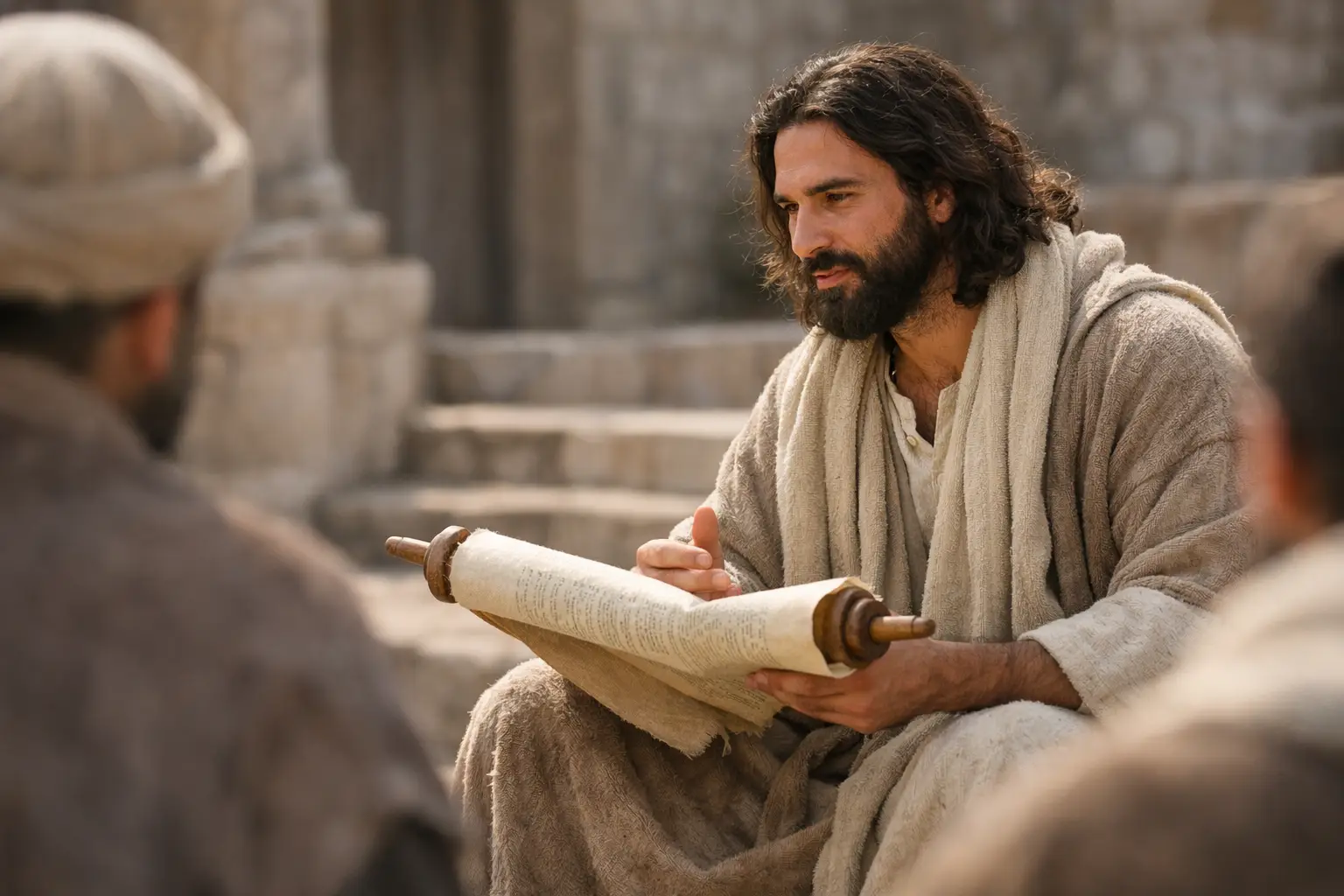
A crowded calendar, polished message, growing audience, or busy outreach schedule can all look like fruitful ministry. Yet Jesus gave a more searching measure. “If you abide in my word, you are truly my disciples” (John 8:31). Jesus centered ministry begins there: not with our plans for Christ, but with continued attention to the words of Christ.
That conviction does not minimize the rest of Scripture. Jesus Himself affirmed the Scriptures, fulfilled the Law and the Prophets, and taught His disciples how God’s Word points to Him. But the words of Jesus must remain in clear view as we read, teach, serve, lead, and make disciples. His commands reveal the character of the kingdom He proclaimed and the kind of life He calls His people to live.
What Makes Ministry Jesus Centered?
A Jesus centered ministry is not merely a ministry that uses Jesus’ name, displays a cross, or includes a verse from the Gospels in a sermon. Those things may be sincere and valuable. The deeper question is whether Jesus’ teaching, authority, mission, and example actively shape the ministry’s decisions.
Jesus told His followers, “Why do you call me ‘Lord, Lord,’ and not do what I tell you?” (Luke 6:46). He connected faithful hearing with faithful practice. The person who hears His words and does them is like a wise builder whose house stands when the storm comes (Matthew 7:24-25). Ministry built on Christ is therefore more than correct language. It is obedient action rooted in what He said.
This affects both public and unseen work. It shapes how a pastor handles influence, how a volunteer treats a difficult person, how a teacher prepares a lesson, and how a church responds when success seems slow. Jesus did not call His disciples to build their own reputations. He called them to follow Him.
Begin With Jesus’ Great Commandments
When asked about the greatest commandment, Jesus answered with wholehearted love for God and love for neighbor (Matthew 22:37-40). He said that all the Law and the Prophets hang on these commands. This gives every ministry a necessary test: Does what we are doing help people love God more fully and love their neighbors more faithfully?
Love for God keeps ministry from becoming a religious performance. It calls leaders and servants to worship, prayer, repentance, and obedience even when no one sees. Jesus warned against practicing righteousness “to be seen by them” (Matthew 6:1). A ministry can be visible without being driven by visibility. The difference is found in the heart and in the purpose.
Love for neighbor keeps ministry from treating people as projects, attendance numbers, or supporters. Jesus saw crowds with compassion. He welcomed children, spoke with those others overlooked, touched the suffering, and gave time to those who came with honest questions. His compassion was never vague sentiment. It moved Him to teach truth, heal, serve, correct, and call people to follow God.
A ministry can be doctrinally serious and still become impatient or distant with people. It can also be compassionate in tone while withholding the truth Jesus taught. Christ-centered faithfulness refuses that false choice. Jesus was “full of grace and truth” (John 1:14), and His servants should seek to reflect both.
Let Jesus Define Greatness
Many ministry pressures arise from competing definitions of success. Growth, resources, reach, and skill can serve God’s purposes, but none of them alone proves that a ministry is healthy. Jesus directly addressed the desire for rank among His disciples: “Whoever would be great among you must be your servant” (Mark 10:43).
Jesus centered ministry does not reject leadership. Jesus appointed, taught, and sent leaders. But He redefined leadership through service. He gave the clearest picture when He washed His disciples’ feet and said, “I have given you an example, that you also should do just as I have done to you” (John 13:15).
This changes how leaders use authority. Authority in Christ’s service is not permission to control people, dismiss questions, or protect personal status. It is a responsibility to care for people under God’s Word. Sometimes that means making difficult decisions, offering correction, or setting wise boundaries. Servant leadership is not passive. It is humble, truthful, and willing to bear the cost of doing what is right.
Teach the Whole Counsel of God Through Christ’s Words
To put Jesus at the center is not to isolate the four Gospels from the rest of the Bible. The apostles preached the risen Christ, explained the meaning of His death and resurrection, and applied His teaching to churches facing real problems. The Old Testament provides the promises, patterns, and preparation that help us understand who Jesus is.
Still, ministry should resist a common drift: treating Jesus’ direct teaching as familiar background while giving greater attention to secondary debates, personal preferences, or cultural concerns. Jesus’ words should be regularly read aloud, carefully interpreted in context, and applied with seriousness.
For example, Jesus’ command to forgive challenges ministry teams where hurt has gone unaddressed. His teaching on prayer confronts self-reliance. His words about money expose greed and anxiety. His call to make disciples directs the church beyond gathering an audience. His instruction to love enemies prevents believers from confusing conviction with hostility.
Not every passage presents an easy application. Faithful teachers must consider audience, setting, and the larger biblical witness. Some commands were given in particular moments to particular people, while others are clearly given to all disciples. Careful interpretation matters. Yet careful interpretation should not become an excuse to soften every word of Jesus that unsettles us.
Ask a Better Question in Planning
Before launching a program, writing a sermon series, or evaluating an outreach effort, ask more than, “Will this work?” Ask, “How does this reflect what Jesus taught and the way He formed disciples?” Practical wisdom matters, but it must serve obedience.
That question may lead to a different pace. Some ministries need more time in Scripture and prayer before adding another activity. Others may recognize that a neglected neighbor, struggling family, or untrained group of believers needs attention more than a highly visible event. There is no single ministry model required for every church or setting. There is, however, one Lord whose teaching must guide every model.
Make Disciples, Not Dependents
Jesus’ final commission is clear: “Make disciples of all nations,” teaching them “to observe all that I have commanded you” (Matthew 28:19-20). The goal is not simply that people hear Christian content or admire gifted leaders. The goal is that they learn to obey Jesus.
That calls for more than occasional inspiration. People need help reading the Gospels, understanding Jesus’ commands, praying His words, and practicing them in ordinary life. A sermon can begin this work, but discipleship continues in homes, conversations, small groups, acts of service, and patient accountability.
Ministry leaders should also be careful not to create dependence on their personalities. Jesus gathered disciples to Himself, not to a platform. He prepared them to carry His message after His ascension through the power of the Holy Spirit. Healthy ministry points people beyond the teacher and toward a living, obedient relationship with Christ.
Remain Connected to Christ
Jesus said, “Apart from me you can do nothing” (John 15:5). These words are especially necessary for those who serve often. It is possible to do work for Jesus while neglecting fellowship with Jesus. Activity can slowly replace abiding.
Abiding includes receiving His words, trusting Him in prayer, confessing sin, obeying what He shows us, and depending on the Holy Spirit. It also includes rest. Jesus invited His weary disciples to “come away by yourselves to a desolate place and rest a while” (Mark 6:31). Rest is not a retreat from faithfulness when it helps restore a servant to faithful dependence.
The fruit Jesus describes is not manufactured by pressure or image management. It grows from remaining in Him. That does not make preparation unnecessary. It gives preparation its proper place. We labor faithfully, but we do not imagine that strategy can produce spiritual life apart from Christ.
A Jesus centered ministry will continue to ask a simple, searching question: Are we hearing and doing what Jesus said? Let that question lead you back to the Gospels with an open Bible and a willing heart. JesusSaid.tv exists to help believers examine His words, understand their biblical foundation, and put them into practice. His words matter because He is Lord, and the most faithful ministry is always one that leads people to know, trust, and obey Him.