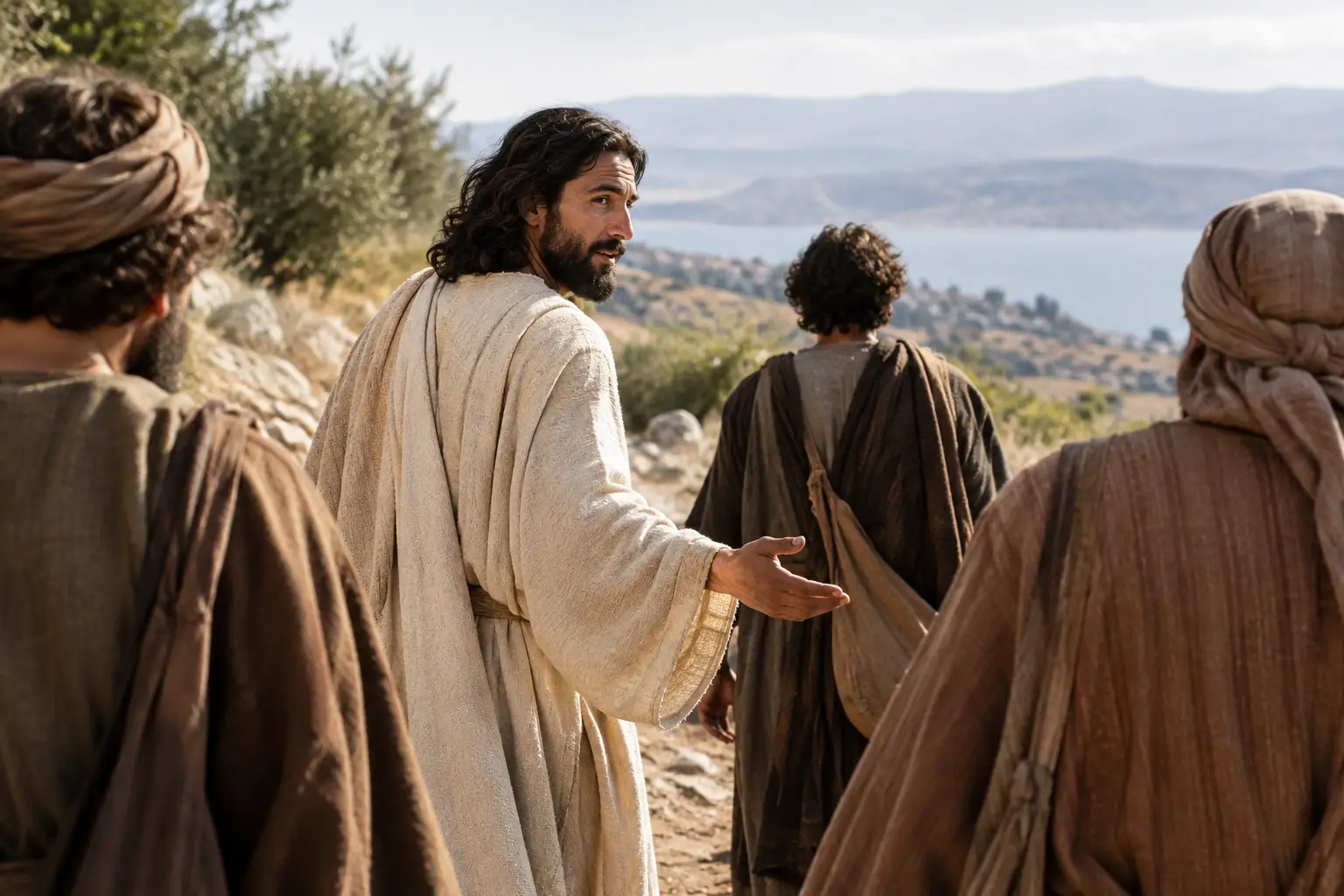
A person can know Bible stories, attend church faithfully, and speak the language of faith without fully answering Jesus’ personal invitation: “Follow me.” Christian discipleship begins there. It is not merely learning information about Jesus or adopting a religious identity. It is learning to trust, obey, and become like the One who calls us.
Jesus did not call His first disciples to admire Him from a distance. He called fishermen to leave their nets, a tax collector to leave his booth, and ordinary people to walk with Him. They listened to His words, watched His life, asked questions, failed at times, received correction, and were sent to serve others. That pattern still gives shape to the Christian life.
What Is Christian Discipleship?
Christian discipleship is the lifelong process of following Jesus Christ as Lord, being formed by His teaching, and learning to live in faithful obedience through the power of the Holy Spirit. It includes belief, but it does not end with belief. A disciple receives Christ’s words and puts them into practice.
Jesus made this plain at the close of the Sermon on the Mount. He compared the person who hears His words and does them to a wise man who built his house on the rock (Matthew 7:24-27). The strength of that house was not found in good intentions or religious appearance. It stood because it was built on hearing and obeying Jesus.
This does not mean disciples earn God’s grace through effort. Salvation is God’s gift, received by faith. Yet grace does not leave a person unchanged. Jesus said, “If you love me, you will keep my commandments” (John 14:15). Obedience is not a substitute for love. It is the fruit of love for Christ.
Jesus Must Remain at the Center
Many helpful practices can support spiritual growth: reading Scripture, gathering with believers, serving, giving, praying, and learning from mature Christians. But Christian discipleship loses its direction if these practices become detached from Jesus Himself. The goal is not simply to become more disciplined, informed, or active. The goal is to know Christ and to follow Him.
Jesus’ words provide the clearest starting point. He calls His disciples to love God with all their heart, soul, mind, and strength, and to love their neighbors as themselves (Mark 12:29-31). He teaches forgiveness, humility, purity of heart, generosity, truthfulness, prayer, and care for those in need. He commands His followers to make disciples of all nations, teaching them “to observe all that I have commanded you” (Matthew 28:19-20).
The rest of Scripture does not compete with Jesus’ teaching. It supports, explains, and harmonizes with it. The apostles consistently called believers to a life shaped by Christ. Paul urged Christians to “put on the Lord Jesus Christ” (Romans 13:14), while Peter pointed believers to Jesus’ example in suffering and holiness (1 Peter 2:21). A faithful study of the whole Bible should continually bring us back to the Lord who spoke these words.
Following Jesus Is More Than Agreement
It is possible to agree that Jesus’ teachings are good while resisting their authority in the places that cost us something. Jesus’ call reaches beyond public worship and private opinions. It reaches into our speech at home, our decisions at work, our treatment of people who inconvenience us, and our response when we have been hurt.
Consider Jesus’ command to forgive. In Matthew 6:14-15, He speaks soberly about forgiving others. Discipleship does not treat this as optional advice for unusually mature Christians. At the same time, forgiveness is not the same as pretending evil did not happen or placing oneself back into an unsafe situation. It releases personal vengeance to God and refuses to let bitterness rule the heart. Wisdom, truth, appropriate boundaries, and forgiveness may all be necessary.
Jesus’ teaching on loving enemies is similarly demanding. He said, “Love your enemies and pray for those who persecute you” (Matthew 5:44). This does not require calling wrong right. It calls disciples to reject hatred and retaliation, entrusting justice to God while seeking the good of others. Such obedience is difficult because it reveals how deeply we need Christ’s mercy and strength.
The Daily Practices That Form a Disciple
Discipleship is not sustained by a single emotional decision. It grows through repeated attention to Jesus and repeated responses to His words. The practices below are not a formula for earning God’s favor. They are ordinary ways believers make room to hear, trust, and obey Him.
Listen to Jesus in Scripture
Begin with the Gospels. Read a section slowly and ask simple, honest questions: What did Jesus say? To whom was He speaking? What does this reveal about God, His kingdom, and the human heart? What response does Jesus call for?
Context matters. Jesus’ words should not be lifted from their setting to support our preferences. Read the verses around a passage, observe the situation, and compare His teaching with the wider witness of Scripture. When a command is clear, do not let the desire for more information become a reason to delay obedience.
Pray With Honesty and Dependence
Jesus taught His disciples to pray, beginning with the Father’s name, kingdom, and will (Matthew 6:9-13). Christian prayer is not only a way to bring needs before God, though we should bring them. It is also a way of bringing our desires into submission to His will.
A disciple can pray plainly: “Lord, show me where I am resisting You. Give me grace to obey what You have shown me.” Such prayer invites self-examination without despair. Jesus does not expose sin to crush those who come to Him. He calls people out of darkness and into life.
Obey in the Next Clear Step
Growth often looks less dramatic than people expect. It may mean telling the truth when a lie would be easier, reconciling with a brother or sister, turning away from a hidden sin, serving someone without recognition, or making time for the person God has placed before you.
The next step will differ from person to person. A new believer may need to learn the basic teachings of Jesus and establish a pattern of Scripture and prayer. A long-time church member may need to revisit a command that has become familiar but neglected. In either case, obedience is not perfection. It is a willing turning of the heart toward Christ whenever He corrects, leads, or comforts.
Walk With Other Believers
Jesus formed a community of disciples, not isolated followers. The early church devoted itself to the apostles’ teaching, fellowship, breaking bread, and prayer (Acts 2:42). Christians need one another for encouragement, correction, practical help, and shared worship.
A healthy church or small group should do more than create social connection. It should help people hear and apply the words of Jesus. Mature believers can ask loving questions: What is Christ teaching you? Where do you need encouragement? What would obedience look like this week? These conversations are most fruitful when marked by humility, confidentiality, and grace.
Discipleship Includes Both Cost and Joy
Jesus spoke honestly about the cost of following Him. “If anyone would come after me, let him deny himself and take up his cross daily and follow me,” He said (Luke 9:23). This is not a call to despise the life God gives. It is a call to deny the self-rule that insists on being lord over our own lives.
There will be choices that feel costly: releasing a cherished sin, choosing integrity over advantage, remaining faithful when obedience is misunderstood, or serving when no one notices. Jesus never promised that discipleship would be comfortable. He did promise His presence. After commanding His followers to make disciples, He said, “I am with you always, to the end of the age” (Matthew 28:20).
The joy of discipleship is not found in having an easy path. It is found in belonging to Jesus, knowing His mercy, and participating in the life of His kingdom. His invitation remains full of grace: “Come to me, all who labor and are heavy laden, and I will give you rest” (Matthew 11:28). The One who calls us to follow also receives the weary and strengthens the weak.
A Faithful Next Step
Christian discipleship becomes real in the specific place where Jesus’ words meet our lives. Read one passage from the Gospels this week, linger over what Jesus says, and ask Him for the courage to obey one clear truth. Then share that step with a trusted believer who will pray with you and encourage you to keep following Christ.
The call of Jesus has not changed: “Follow me.” His words matter, and every willing step of obedience draws the disciple nearer to the One who gives life.
Leave a Reply