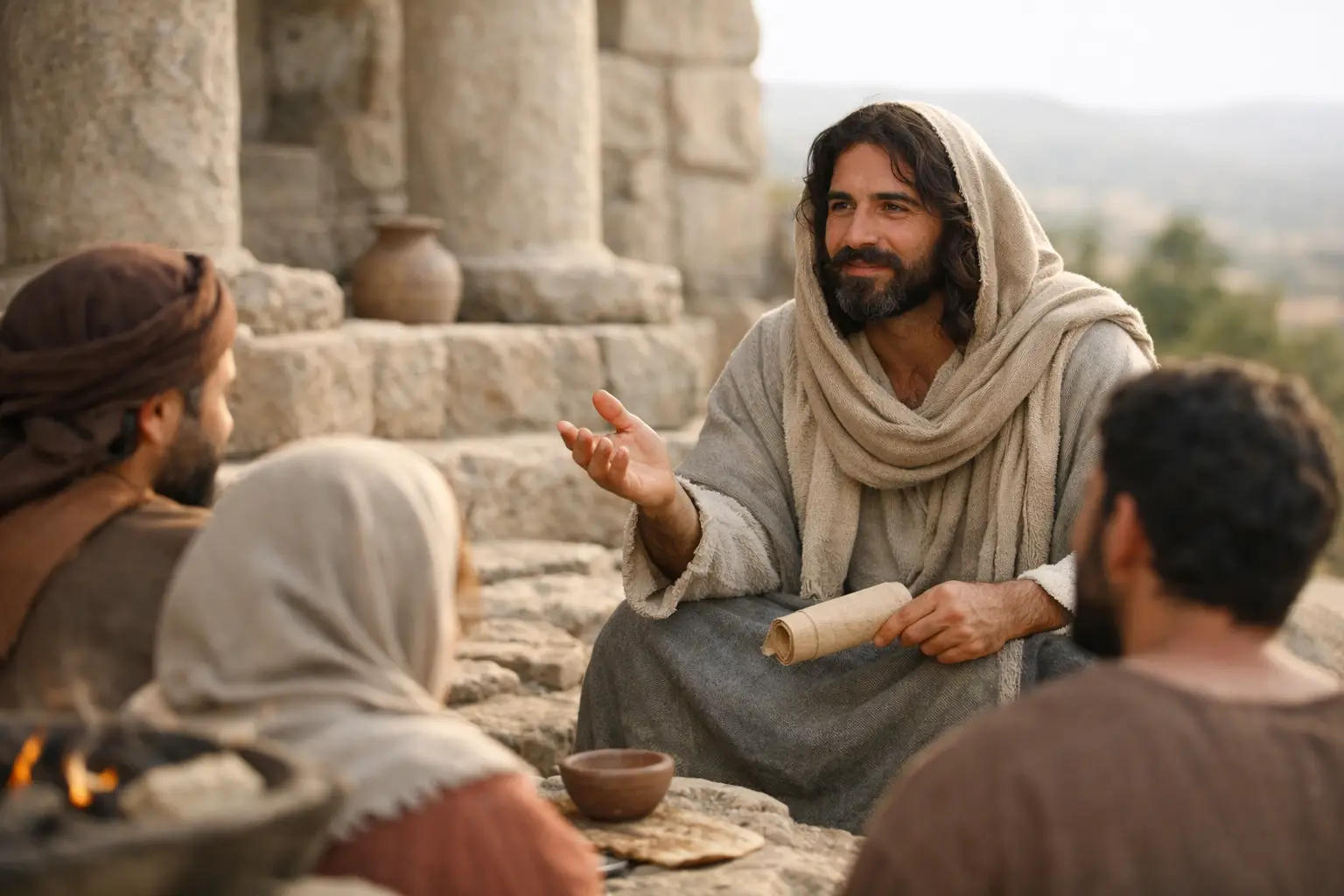
A faithful Jesus teachings list is more than a collection of familiar sayings for a wall or a journal. Jesus spoke with the authority of the Son of God, calling people not merely to admire His words but to hear and obey them. He closed the Sermon on the Mount with a searching picture: the wise person is the one who hears His words and puts them into practice (Matthew 7:24).
The teachings below are not a substitute for reading the Gospels carefully. They are a starting point for seeing the major calls Jesus placed before His disciples. Read each teaching in its setting. Notice whom Jesus was addressing, what question or circumstance prompted His words, and how His death and resurrection give shape to every command He gives.
How to Use This Jesus Teachings List
Jesus did not offer a detached moral program by which people could earn their way to God. He called people to repent, believe, follow Him, and remain in Him. Obedience matters deeply, but it grows from faith, love, and the transforming work of God rather than self-reliance.
Use this list slowly. Take one teaching at a time, read the surrounding passage, pray honestly about your response, and look for a concrete way to obey. Some commands address a specific moment, while others establish a continual pattern of life for every disciple. The aim is not to check off twelve items. The aim is to know Christ and walk in His words.
12 Teachings of Jesus to Study and Practice
1. Repent and believe the gospel
Jesus began His public ministry with a clear summons: “Repent, and believe in the gospel” (Mark 1:15). Repentance is not simply feeling sorry for sin. It is a turning of mind, heart, and direction toward God. Belief is not bare agreement with facts. It is trusting Jesus and receiving the good news of God’s kingdom.
This remains the beginning of Christian life and a continuing posture within it. When Christ exposes sin, the proper response is not excuse-making or despair, but turning to Him in faith.
2. Love God with your whole being
When asked about the greatest commandment, Jesus pointed to loving God with all the heart, soul, mind, and strength (Mark 12:29-30). This teaching places God at the center of life. Faith is more than religious activity, correct language, or occasional attention to spiritual matters.
Loving God reshapes priorities. It affects what we seek, what we treasure, how we use time, and whose approval we desire. Jesus later connected love for Him with keeping His commands (John 14:15), making love active rather than merely emotional.
3. Love your neighbor as yourself
Jesus joined love for neighbor to love for God, saying there is no commandment greater than these (Mark 12:31). He made neighbor-love concrete in the parable of the Good Samaritan, where mercy crossed social boundaries and came at personal cost (Luke 10:25-37).
This teaching reaches beyond natural affection for friends or people like us. It asks whether we see the person in front of us as someone to serve. Love may involve generosity, patience, truthful speech, practical help, and a willingness to bear inconvenience for another’s good.
4. Love your enemies and pray for those who oppose you
Jesus said, “Love your enemies and pray for those who persecute you” (Matthew 5:44). These words are among His most challenging teachings because they confront the instinct to return injury for injury. Jesus does not call evil good or deny the need for justice. He forbids His followers from nurturing hatred and personal vengeance.
Prayer is a serious beginning. It brings wounded hearts before God and reminds us that no person is beyond His mercy. This kind of love may require wise boundaries, especially where abuse or danger is present. Yet a disciple of Jesus refuses to let another person’s wrongdoing become permission for bitterness to rule the heart.
5. Forgive as you have been forgiven
After teaching His disciples to pray, Jesus spoke plainly about forgiving others (Matthew 6:14-15). He also told Peter that forgiveness is not to be rationed by a small numerical limit (Matthew 18:21-22). The Christian pattern of forgiveness is grounded in the mercy God has shown us.
Forgiveness is not pretending sin did not occur, removing every consequence, or restoring trust without repentance and wisdom. It is releasing personal vengeance to God and refusing to hold another’s debt as a weapon. In many situations, forgiveness is a prayerful process rather than a single uncomplicated moment.
6. Seek first God’s kingdom
Jesus told anxious listeners to “seek first the kingdom of God and his righteousness” (Matthew 6:33). He spoke these words in a passage about food, clothing, and the Father’s care. His answer to anxiety was not careless denial of daily needs, but a reordered life under God’s rule.
Seeking the kingdom means asking, in ordinary decisions, what honors the King. It changes the questions we bring to work, family, money, and ambition. Rather than being ruled by fear about tomorrow, believers are called to trust the Father and obey Him faithfully today.
7. Do not judge hypocritically
“Judge not” is often quoted as though Jesus prohibited all moral discernment. The surrounding passage says something more demanding. Jesus warns against condemning others while remaining blind to one’s own sin, then calls His followers to remove the log from their own eye first (Matthew 7:1-5).
Jesus also taught His disciples to recognize false prophets by their fruit (Matthew 7:15-20). Therefore, Christian discernment is necessary, but it must be humble, truthful, and self-examining. The goal is not to gain moral superiority. It is to see clearly enough to help a brother or sister with gentleness.
8. Pray with sincerity and persistence
Jesus warned against prayer performed to impress people and against empty repetition that imagines God can be manipulated (Matthew 6:5-8). He gave the Lord’s Prayer as a pattern that begins with God’s name, kingdom, and will before bringing daily needs, forgiveness, and temptation before Him.
Jesus also encouraged persistent prayer (Luke 18:1-8). Persistence is not an attempt to wear God down. It is faithful dependence on a Father who hears. Prayer trains the heart to seek God’s will while bringing every real burden into His presence.
9. Serve rather than seek status
When His disciples argued about greatness, Jesus redirected them: “Whoever would be great among you must be your servant” (Mark 10:43). He grounded this teaching in His own mission, saying that the Son of Man came not to be served but to serve and to give His life as a ransom for many (Mark 10:45).
In Christ’s kingdom, leadership is measured differently. Influence is not a license for self-importance. In a home, church, workplace, or ministry, the question is not only, “What position do I hold?” but, “Whom am I willing to serve?”
10. Take up your cross and follow Jesus
Jesus said that anyone who would come after Him must deny himself, take up his cross, and follow Him (Luke 9:23). In the first-century world, the cross was not a decorative symbol. It represented shame, suffering, and death. Jesus was calling His followers to yield their lives fully to Him.
This does not mean every hardship is automatically a cross to bear. It means allegiance to Jesus comes before self-rule, comfort, reputation, and even costly choices that obedience may require. The call is difficult, but it is given by the One who gave Himself for us and leads His people into true life.
11. Remain in Jesus and bear fruit
In John 15, Jesus describes Himself as the true vine and His disciples as branches. “Apart from me you can do nothing,” He says (John 15:5). Christian fruitfulness does not come from frantic religious effort. It comes through abiding in Christ, receiving His words, trusting His love, and walking in obedience.
Abiding includes regular attention to Scripture, prayer, fellowship with believers, repentance, and dependence on the Holy Spirit. Fruit may appear in character, love, perseverance, witness, and service. Growth is not always dramatic, but a living branch remains connected to the vine.
12. Make disciples and teach His commands
After His resurrection, Jesus commissioned His followers to make disciples of all nations, baptizing them and teaching them “to observe all that I have commanded you” (Matthew 28:19-20). This commission belongs to the whole church, not only to pastors, missionaries, or public teachers.
Making disciples includes speaking the good news of Christ, welcoming new believers into a life of faith, and patiently teaching obedience to His words. It is relational and long-term. Jesus’ final promise gives courage for the task: “I am with you always, to the end of the age.”
Let the Words of Jesus Lead You
A list can inform the mind, but Jesus calls for more than information. Choose one teaching that has exposed a need in your life. Read it again in the Gospel, ask the Lord for grace to obey it, and take the next faithful step. As you continue studying the words of Christ, let His voice remain at the center: hear Him, trust Him, and put His teachings into practice.