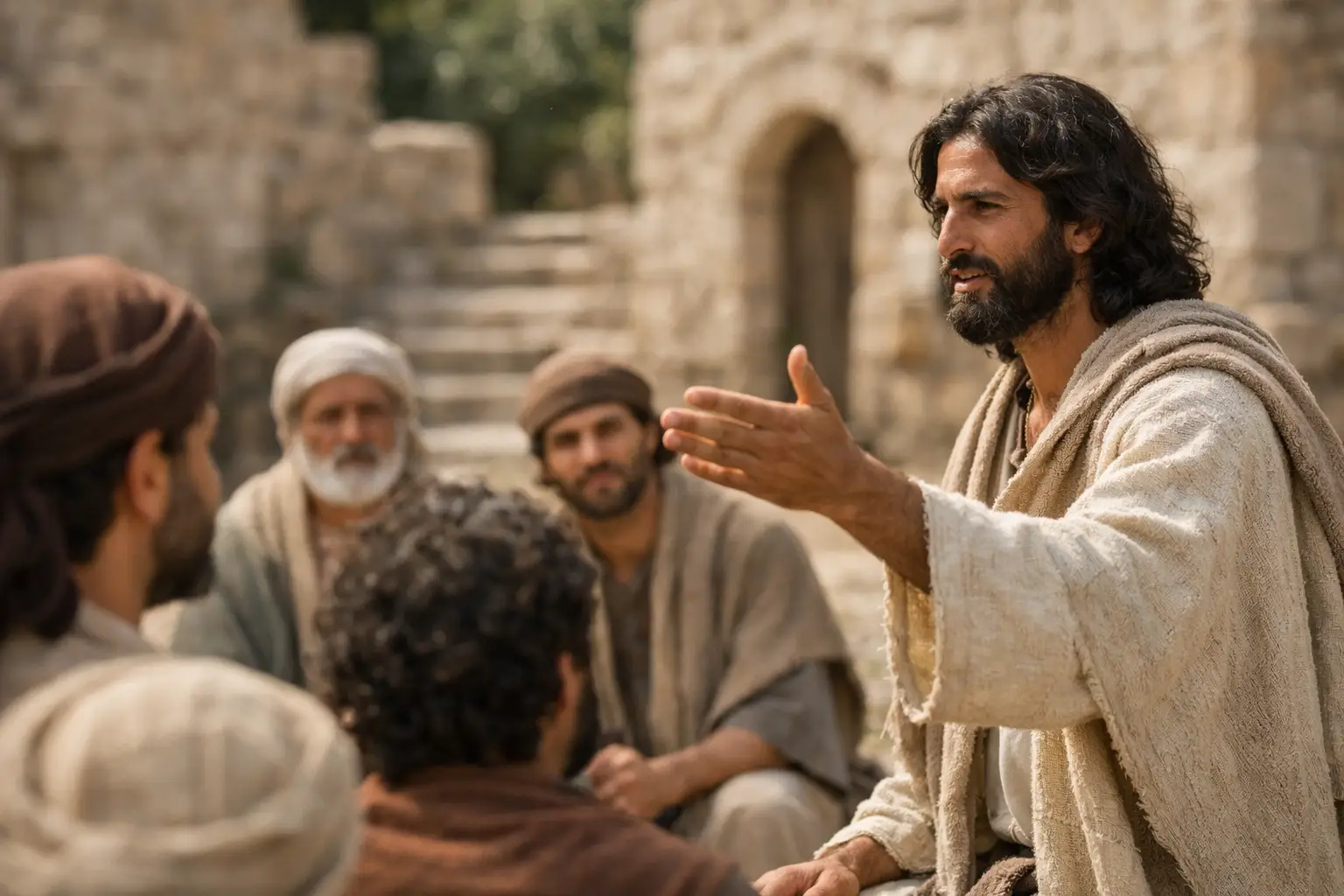
Jesus did not call His disciples merely to admire His teaching. He called them to hear His words and put them into practice. When we consider the top commands Jesus gave believers, we are not collecting religious rules to earn God’s favor. We are listening to the risen Lord who loved us, gave Himself for us, and tells His people how to live in fellowship with Him.
At the close of the Sermon on the Mount, Jesus compared the person who hears His words and acts on them to a wise builder whose house stands firm in the storm (Matthew 7:24-27). Obedience does not replace grace. It is the fruit of faith and the loving response of those who belong to Christ. The commands below are closely connected. They describe a life centered on God, shaped by love, marked by repentance, and sent into the world with the good news.
How to Read the Commands of Jesus
Jesus gave some commands in particular settings, to particular people. For example, His instruction to the apostles to go into all the world has a unique place in their mission, yet the church rightly sees it as foundational to making disciples in every generation. Other commands, such as loving God and loving our neighbor, express the enduring heart of faithful life before God.
We should also resist separating one command from another. Someone may want to serve others while avoiding forgiveness, or speak about truth without the love Jesus requires. Christ’s words belong together. They reveal the character of His kingdom and lead us back to dependence on Him.
Top Commands Jesus Gave Believers
Love God with Your Whole Life
When asked which commandment was greatest, Jesus answered: “You shall love the Lord your God with all your heart, with all your soul, and with all your mind” (Matthew 22:37). This is not a call to occasional religious feeling. It is wholehearted devotion to God – trusting Him, worshiping Him, valuing His will, and ordering every area of life under His authority.
Love for God is the root of Christian obedience. Jesus said, “If you love Me, keep My commandments” (John 14:15). We do not obey to persuade Jesus to love us. We obey because His love has met us and changed the direction of our lives. A useful daily question is simple: What choice before me would show that God is first?
Love Your Neighbor as Yourself
Jesus immediately joined the greatest commandment with a second: “You shall love your neighbor as yourself” (Matthew 22:39). He said that all the Law and the Prophets depend on these two commands. Love for God becomes visible in the way we treat people made in His image.
In the parable of the good Samaritan, Jesus showed that neighbor-love is not limited to the familiar, convenient, or socially acceptable person (Luke 10:25-37). It crosses barriers and notices real need. This does not mean believers must say yes to every request or ignore wisdom and healthy boundaries. It does mean we cannot use inconvenience, difference, or fear as an excuse to withhold mercy.
Repent and Believe the Gospel
At the beginning of His public ministry, Jesus proclaimed, “Repent, and believe in the gospel” (Mark 1:15). Repentance is more than regret over sin. It is a turning of the mind, heart, and life toward God. Faith is more than agreeing that certain facts are true. It is trusting Jesus Himself and resting in the good news of His kingdom.
This command remains central for the person first coming to Christ and for the lifelong disciple. Believers do not graduate from repentance. When the Spirit exposes pride, dishonesty, resentment, greed, or unbelief, we bring it into the light and turn again to the Lord. His invitation is serious, but it is also full of mercy. Jesus came not to call the self-righteous, but sinners to repentance (Luke 5:32).
Follow Jesus
Jesus repeatedly said, “Follow Me” (Matthew 4:19; Luke 9:23). Following Him means more than adopting a moral code or adding Christian activity to an already self-directed life. It means recognizing Jesus as Lord and learning His way.
In Luke 9:23, Jesus explains that discipleship involves denying ourselves, taking up our cross daily, and following Him. Self-denial is not self-hatred. It is the refusal to make self-rule the final authority. At times, following Christ will cost comfort, approval, possessions, or personal plans. The cost is real, and Jesus never concealed it. Yet He also teaches that the way of losing our lives for His sake is the way of truly finding life (Matthew 16:24-25).
Forgive as Those Forgiven by God
Jesus taught His disciples to pray, “Forgive us our debts, as we forgive our debtors” (Matthew 6:12). He then spoke plainly about the seriousness of refusing forgiveness (Matthew 6:14-15). In the parable of the unforgiving servant, He exposed the contradiction of receiving immense mercy from God while demanding repayment from others (Matthew 18:21-35).
Forgiveness is often costly, especially where there has been deep injury. It does not call evil good, erase wise consequences, or require someone to remain in an unsafe situation. Reconciliation may require repentance, truthfulness, and time from both parties. But forgiveness releases personal vengeance to God and refuses to let bitterness rule the heart. Jesus calls His people to extend the mercy they themselves have received.
Pray, Seek, and Remain in Him
Jesus commanded His followers to pray with confidence in the Father’s care: “Ask, and it will be given to you; seek, and you will find; knock, and it will be opened to you” (Matthew 7:7). He did not present prayer as a technique for controlling outcomes. Prayer is dependent communion with God. We ask honestly, submit willingly, and trust that our Father gives what is truly good.
Jesus also said, “Abide in Me” (John 15:4). A branch bears fruit only by remaining connected to the vine. Christian character, endurance, love, and useful service do not grow from willpower alone. They grow as believers remain in Christ through His words, prayer, obedience, and fellowship with His people. Busy ministry without abiding can become empty activity.
Make Disciples and Teach Christ’s Commands
After His resurrection, Jesus gave His followers the Great Commission: “Go therefore and make disciples of all nations” (Matthew 28:19-20). The command includes baptism and teaching believers “to observe all things that I have commanded you.” The goal is not simply decisions, attendance, or information. It is disciples who learn to obey Jesus.
This calling belongs to the whole church, though people fulfill it in different places and roles. A pastor may teach a congregation, a parent may patiently form children in the faith, and a believer may speak of Christ with a coworker or encourage a new Christian in Scripture. Not every disciple has the same public platform, but every disciple can bear faithful witness to Jesus.
Obedience Begins with Hearing Christ Clearly
The commands of Jesus are not a checklist for proving spiritual superiority. They lead us to the One who has authority, who forgives sin, and who supplies what He commands. When we fail, we do not hide from Him. We confess, receive His mercy, and continue following.
Begin with one of Jesus’ teachings this week. Read it in its full context. Ask what it reveals about His heart, where your life resists it, and what faithful action love requires today. Then bring that response before Him in prayer. As Jesus promised His disciples in the Great Commission, He is with His people always – and His presence gives courage to live what He has said.